

How to Prevent Ice Dams on Your Somerset County Home
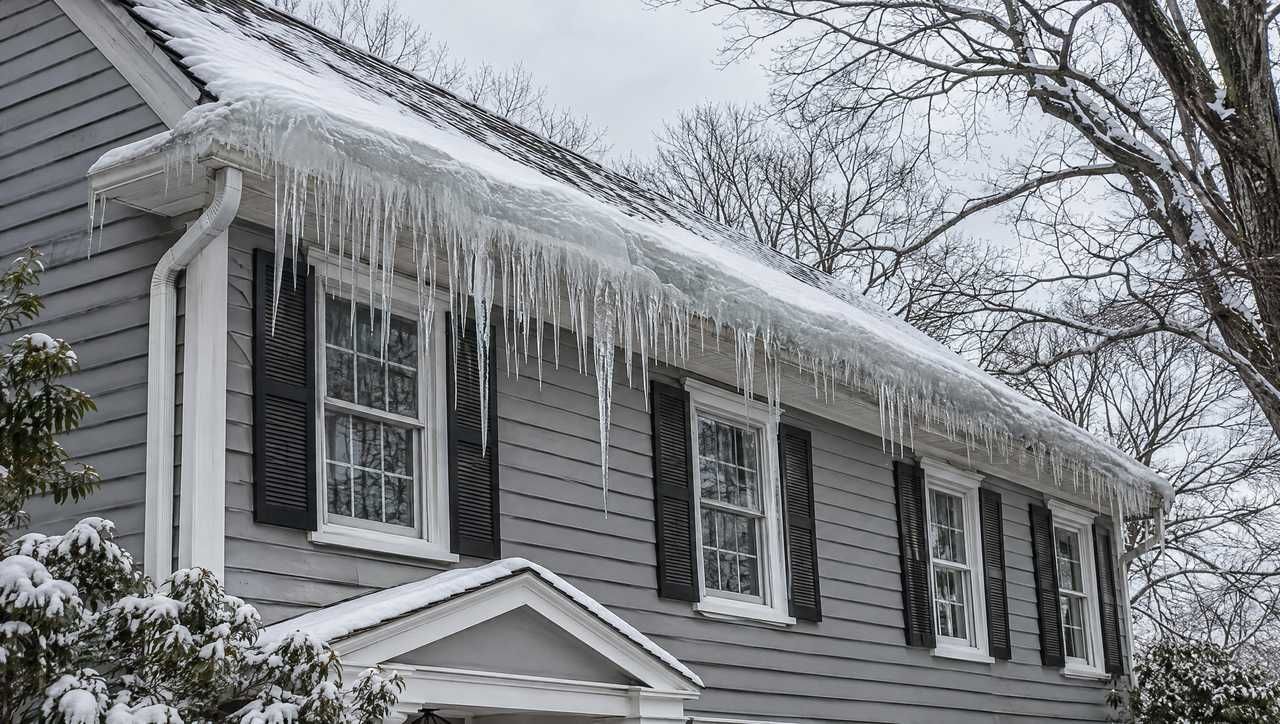
Every winter we hear from homeowners who find a brown ring spreading across a bedroom ceiling a few days after a snowstorm. The roof looks fine from the driveway, but the gutters are full of ice. The culprit is almost always an ice dam.
An ice dam is a ridge of ice that builds up along the lower edge of your roof and traps melting snow behind it. That water has nowhere to go, so it backs up under the shingles and finds its way into your walls and ceilings. Knowing how to prevent ice dams before the first big storm is far easier than drying out a soaked wall in February.
This guide explains why ice dams form, the signs to watch for, the prevention steps that work, and what to do if water is already coming inside.
What Is an Ice Dam and Why Does It Form?
Heat from your living space rises into the attic. If the attic is warm enough, it heats the roof deck from below and melts the bottom layer of snow, even when the air outside is well below freezing.
That meltwater runs down the roof until it reaches the eaves. The eaves hang out past the exterior walls, so there is no warm attic underneath them. They stay as cold as the outdoor air, and the water freezes again right at the edge.
Each melt and refreeze makes the ridge of ice a little taller until it holds back a pool of water. Shingles shed water running downhill, but standing water seeps up under them, through the roof deck and into the house.
New Jersey winters build ice dams well: heavy snow from nor'easters, then sunny days and freezing nights, repeated all season. Many older colonials and split-levels in Basking Ridge, Bernardsville and Warren also have attics with thin insulation and plenty of air leaks, which makes the problem worse.
Warning Signs of Ice Dams on Your Home
Walk around your home after every significant snowfall and look for these signs, inside and out:
- Large icicles or a ridge of ice: Thick icicles or a solid band of ice along the roof edge mean meltwater is freezing at the eave.
- Uneven snow melt: Bare patches higher on the roof while the eaves stay snow-covered point to heat escaping from the attic.
- Water stains on ceilings: Brown or yellow rings near exterior walls, especially in upstairs rooms and closets, are a classic sign.
- Stains on exterior walls: Water can run down inside the wall and show up below a window or near the baseboard.
- Peeling or blistering paint: Moisture trapped behind paint on soffits, fascia, siding or interior walls makes it bubble and flake.
- Frost or damp insulation in the attic: Frost on the underside of the roof deck or wet insulation near the eaves is a red flag.
Some signs hide in closets and behind furniture. Our guide to hidden water damage signs in Somerset County homes covers the less obvious clues to check.
How to Prevent Ice Dams Before Winter Hits
The goal of ice dam prevention is to keep the roof deck cold and give meltwater a clear path off the roof. Some of this you can handle yourself, and some belongs with a qualified pro.
Clean Gutters and Downspouts in Late Fall
Clogged gutters do not cause ice dams on their own, but debris holds water that freezes solid and gives the dam a head start at the roof edge.
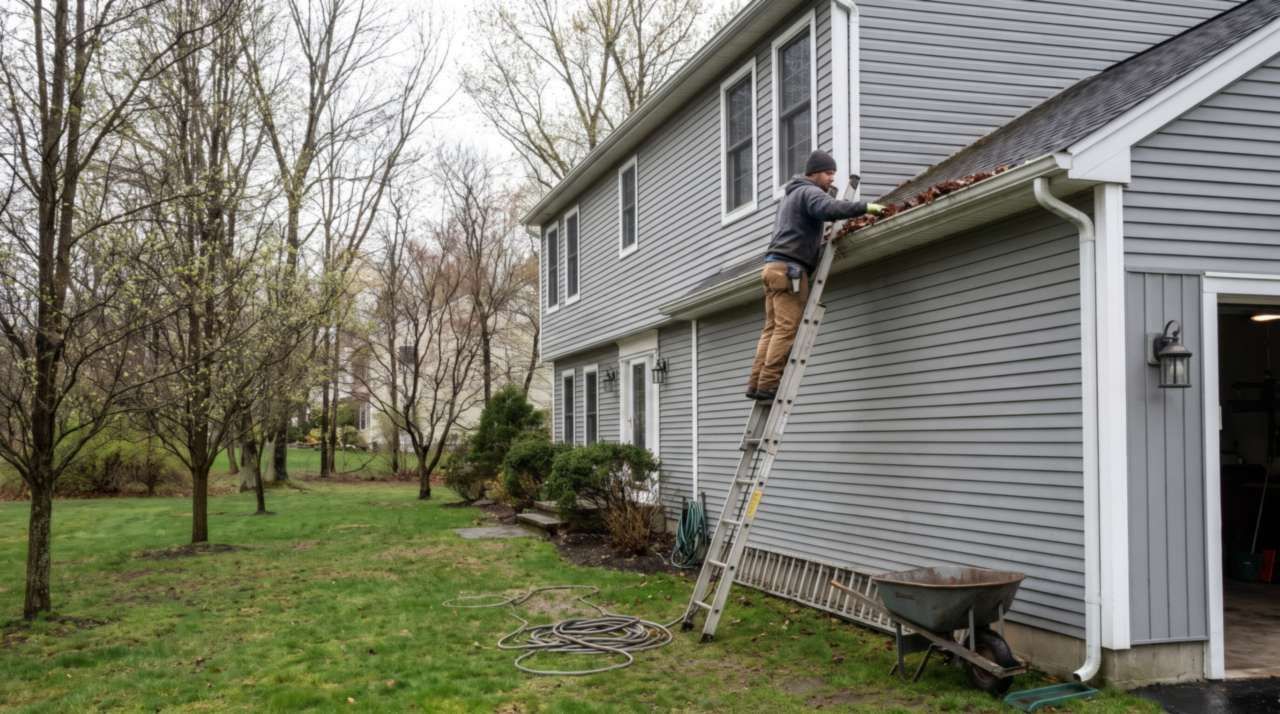
Clean your gutters after the last leaves drop, which in Somerset County is usually mid to late November. Flush them with a hose to make sure water flows freely, and check that each downspout is clear from top to bottom. Point the downspouts at least a few feet away from the foundation so meltwater does not pool and freeze along your walkways.
If your home is two or three stories, or you are not comfortable on a ladder, see our gutter cleaning schedule and tools for tall homes. We also clean gutters and repair loose or sagging sections so they drain properly all winter.
Air-Seal Attic Bypasses
Air leaks from your living space into the attic, called attic bypasses, are a major source of the heat that melts roof snow. Common ones include:
- Gaps around recessed light fixtures in upstairs ceilings
- Openings around plumbing vent pipes and wiring
- Gaps around the chimney
- Bathroom exhaust fan housings
- The attic hatch or pull-down stairs
You can weatherstrip and insulate the attic hatch yourself in an afternoon. The rest is a job for a qualified insulation pro, because sealing around chimneys and light fixtures calls for fire-rated materials and specific clearances.
Also check where your bathroom fans vent. A fan that blows warm, humid air into the attic instead of outside adds heat and moisture right where you do not want it.
Check Attic Insulation and Ventilation
Insulation on the attic floor keeps heat in your living space. Ventilation lets cold outside air flow through the attic so the roof deck stays close to the outdoor temperature.
Most attics take in cold air through soffit vents at the eaves and let it out through a ridge or gable vent. If insulation is pushed against the soffit vents, or they are painted over, that airflow stops.
If your insulation looks thin, uneven or compressed, or you can see the tops of the ceiling joists, it is worth having a qualified insulation contractor take a look. Homes built in the 1960s to 1980s often have far less insulation than current standards call for. For more on what older houses need each year, read our guide to preventive maintenance for aging Somerset homes.
Rake Snow Off the Eaves From the Ground
After a big storm, clearing snow from the lower few feet of the roof takes away the fuel for an ice dam. Use a roof rake, a long-handled tool that lets you pull snow down while you stand on the ground:
- Work from the ground only: Never use a roof rake from a ladder.
- Focus on the eaves: Clearing the bottom three to four feet of the roof is usually enough.
- Leave a thin layer: Do not scrape down to the shingles. An inch or so of snow left behind protects the roof surface.
- Watch for power lines: Look up before you start, and keep the metal pole well clear of any wires.
Rake soon after the snow stops, before it melts and refreezes. If you cannot reach safely from the ground, leave it to a professional.
What Not to Do About Ice Dams
Several common reactions to a wall of ice cause more damage than the ice dam itself.
Do not chip or hammer at the ice. Hatchets, ice picks and shovels crack shingles, dent gutters and can puncture the roof.
Do not climb onto an icy roof. A fall from a roof or ladder in winter can be life-changing, and no amount of water damage is worth that risk.
Do not spread rock salt on the roof. Rock salt can damage shingles, corrode metal gutters and flashing, and kill the shrubs and plants below when it washes off. Some roofers use calcium chloride products in a controlled way, but that is a job for someone who knows what the runoff will hit.
Do not use open flames or heat guns. They are a fire hazard near roofing materials and wood trim.
What to Do If Water Is Coming Inside
If you see water dripping from a ceiling or running down a wall during a thaw, act quickly to limit the damage.
- Protect your belongings: Move furniture, rugs and electronics out of the way and put buckets and towels down to catch water.
- Stay away from wet electrical fixtures: If water is near a light fixture or outlet, do not touch it. Turn off that circuit at the breaker panel only if you can reach the panel safely without standing in water.
- Keep clear of a sagging ceiling: A bulging ceiling may be holding water and can come down without warning. Keep people and pets out of the room.
- Document everything: Take photos and video of the leak, the ceiling and the ice on the roof. Your insurance company will want them.
- Call for help: A roofer can safely remove the ice dam itself, often with low-pressure steam. For the inside of your home, our 24-hour emergency home repair team can help with water that is already coming in.
The faster wet materials dry out, the less damage you will have. Drywall and insulation that stay wet for more than a day or two are much more likely to grow mold.
Repairing Interior Water Damage After an Ice Dam
Once the ice is gone and the roof has been checked, fix what the water left behind. Water travels along framing, so even a small leak can reach places you cannot see.
Dry Out and Assess
Dry the area completely with fans and a dehumidifier. Press on stained drywall: if it feels soft, crumbly or spongy, it needs to be cut out and replaced. Soaked attic insulation above the stain should be replaced by a qualified pro.
Replace Damaged Drywall
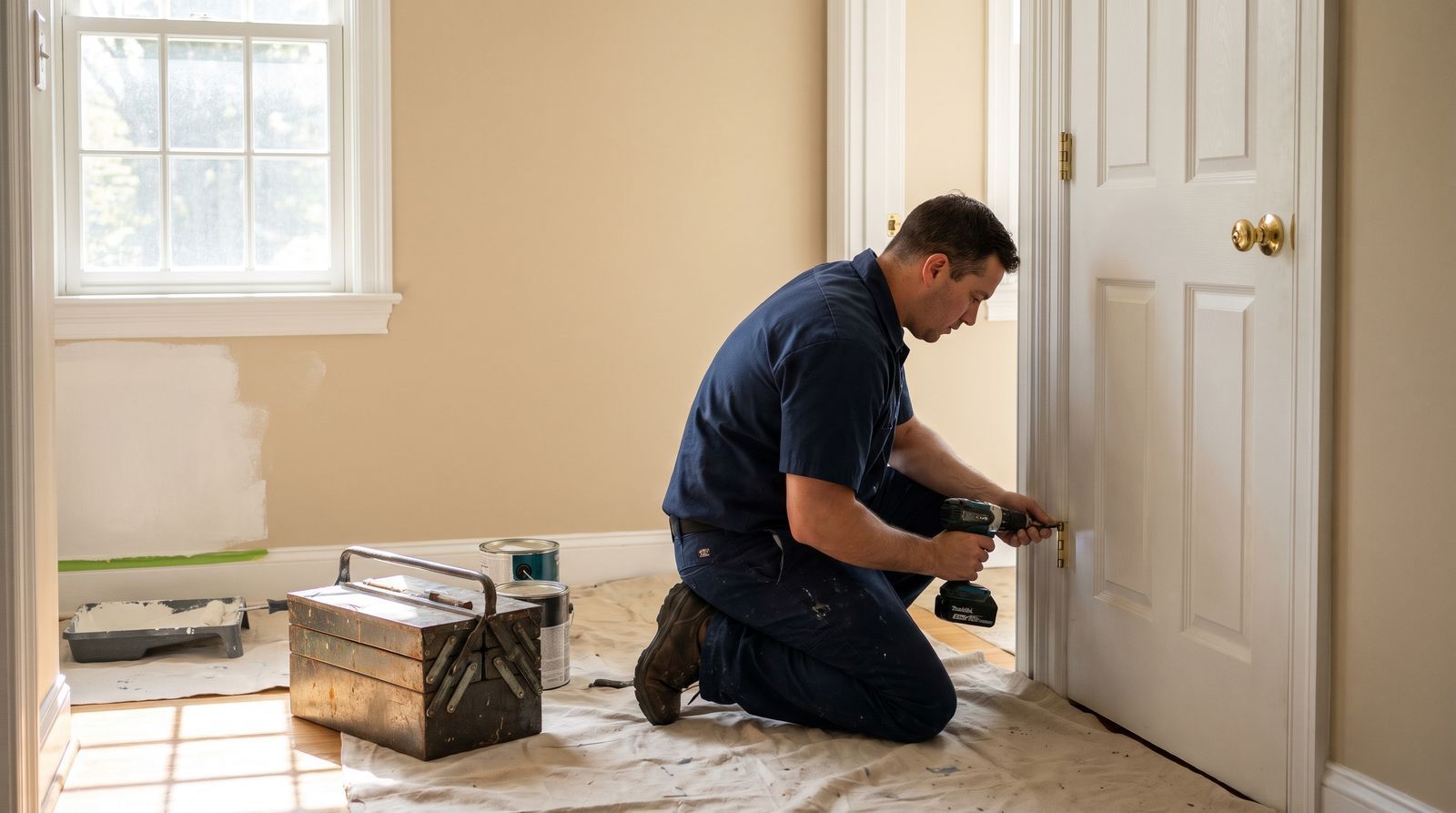
A small stain on a ceiling that dried quickly can sometimes be sealed and painted. Drywall that sagged, softened or grew mold has to come out. Our sheetrock patch guide walks through small wall patches you can do yourself. Ceilings, larger sections and anything with mold are better left to a pro, and our damage repair services cover cutting out wet material, replacing drywall and finishing it to match.
Prime and Repaint
Water stains bleed through ordinary paint, so seal them with a stain-blocking primer before you repaint. On the exterior, scrape and repaint peeling soffits, fascia and trim once the weather warms, and check for soft wood underneath. Our interior and exterior painting crew can match your existing colors so the repair blends in.
When to Call a Pro for Ice Dam Prevention and Repair
You can weatherstrip the attic hatch, rake snow from the ground, clean low gutters and patch a small dried stain yourself. Call a qualified pro for roof repairs, ice removal, attic insulation, air sealing around chimneys and light fixtures, ventilation changes and heat cables.
Call us for gutter cleaning and repair on tall homes, drywall and ceiling repairs, trim and paint touch-ups, and the small fixes our handyman services cover. If water comes in after hours, our emergency line can help limit the damage until the roof is fixed. We serve homeowners across Somerset County, from Hillsborough to Bernardsville.
Frequently Asked Questions
Are icicles on my gutters always a sign of an ice dam?
Not always. A few small icicles are normal. Large, thick icicles along much of the roof edge, especially with a ridge of ice behind them, usually mean an ice dam is forming.
Can clean gutters alone prevent ice dams?
Clean gutters help, but they will not stop ice dams by themselves. The root cause is heat escaping into the attic and warming the roof. Clean gutters, air sealing, good insulation and proper ventilation work best together.
Is it safe to use a roof rake?
A roof rake is safe when you use it from the ground, keep the pole away from power lines and leave a thin layer of snow on the shingles. Never use one from a ladder or climb onto a snowy roof. If you cannot reach the eaves from the ground, hire a professional.
Will homeowners insurance cover ice dam damage?
Many policies cover sudden interior water damage from ice dams, but coverage varies, and some policies treat the roof and the interior differently. Take photos of the ice and the damage, then call your insurance agent to ask what your specific policy covers.
How soon should I repair water-stained drywall?
As soon as the area is completely dry and the source of the leak has been fixed. Drywall that stays wet for more than a day or two can grow mold, so do not wait until spring if the material is soft or sagging.
Protect Your Home Before the Next Storm
Clean your gutters, seal the easy air leaks, have your attic checked and keep a roof rake ready for the first big snow. If an ice dam has already left stains on your ceilings or walls, we can help you put things right. Contact Jeff of All Trades to schedule gutter cleaning, drywall repair or painting anywhere in Somerset County.