

How to Fix a Drafty Front Door Before Winter in New Jersey
You notice it on the first cold night of the season: a thin stream of air at your ankles in the entry, or a coat closet curtain that moves when nobody has opened anything. A drafty front door is one of the most common winter complaints we hear, and it is usually one of the easiest to fix.
The catch is that several different problems feel the same from inside. Worn weatherstripping, a gap under the door, a latch that no longer pulls the door tight, open trim joints and a warped slab all let cold air in.
This guide shows you how to find exactly where the air is getting in, which weatherstripping to buy, how to install a door sweep and adjust the threshold, and how to tune the hardware so the door seals. We also cover storm doors and the point where replacement makes more sense than repair.
How to Find Where Your Drafty Front Door Is Leaking
Spend 15 minutes on diagnosis before you buy anything. Most doors leak in two or three specific spots, and those spots tell you which fix you need. Test on a cold or windy day, when leaks are easiest to find.
The Daylight Test
On a bright day, close the door, turn off the entry lights and look around the perimeter from inside. Any line of daylight along the top, sides or bottom is a direct path for air.
The Paper or Dollar Bill Test
Close the door on a dollar bill laid across the jamb, then try to slide it out. If it pulls free with no resistance, the door is not pressing firmly against the seal at that spot. Repeat every foot or so around the frame and mark loose spots with painter's tape.
The pattern matters. Loose along the whole latch side often points to the strike plate, while loose only at the top latch corner usually means the door is sagging on its hinges.
The Incense Smoke Test
For leaks you can feel but not see, move a lit incense stick slowly around the door edges, trim and lock hardware. Where air comes in, the smoke wavers or blows sideways. Keep it away from coats and curtains.
If the smoke moves at the outer edge of the interior trim, the leak is behind the casing, which we cover in the sealing section below.
Choosing Weatherstripping for an Exterior Door
Weatherstripping is the seal the door closes against on the sides and top. The right type depends mostly on how your frame is built, so pull back a small section of the old seal before you shop.
Compression Bulb
A compression bulb is a hollow or foam-filled tube of vinyl or silicone that the door squeezes as it closes. It is the standard seal on most steel and fiberglass entry doors. Because it springs back, it handles gaps that shift as wood frames swell in humid New Jersey summers and shrink in dry winter air. Replace a flattened or torn bulb with one of the same profile, since an oversized bulb can make the door hard to latch.
Kerf-In Weatherstripping
Kerf-in weatherstripping has a barbed flange that presses into a narrow slot (the kerf) in the door stop of most prehung frames. If you see a thin groove where the old seal attaches, this is the type to buy. Replacement is simple:
- Pull the old strip: Grab it at the top corner and pull it straight out.
- Clean the slot: Clear dirt and old paint with a putty knife so the new flange seats fully.
- Start at the top: Press the top piece in first, then work down each side.
- Trim and test: Cut the side pieces so the corners meet tightly, then repeat the dollar bill test.
V-Strip
V-strip, also called a tension seal, is vinyl or thin metal folded lengthwise into a V. It mounts on the jamb and springs outward against the edge of the closed door. It suits older wood doors in colonials and split-levels built before kerf frames were common. Vinyl versions stick on, while bronze V-strip is nailed in place and lasts much longer.
Foam Tape
Self-adhesive foam tape costs a few dollars a roll and goes on in minutes. It works on the stop of an older door where nothing else fits, or as a quick fix to get through this winter. Expect to replace it every season or two, and apply it to a clean, dry surface on a day above freezing so the adhesive bonds.
Door Sweep Installation and Threshold Adjustment
On many homes, the gap at the bottom of the door is the single biggest draft. Two parts work together here: the sweep or door bottom on the door, and the threshold it closes against.
Sweep or Door Bottom
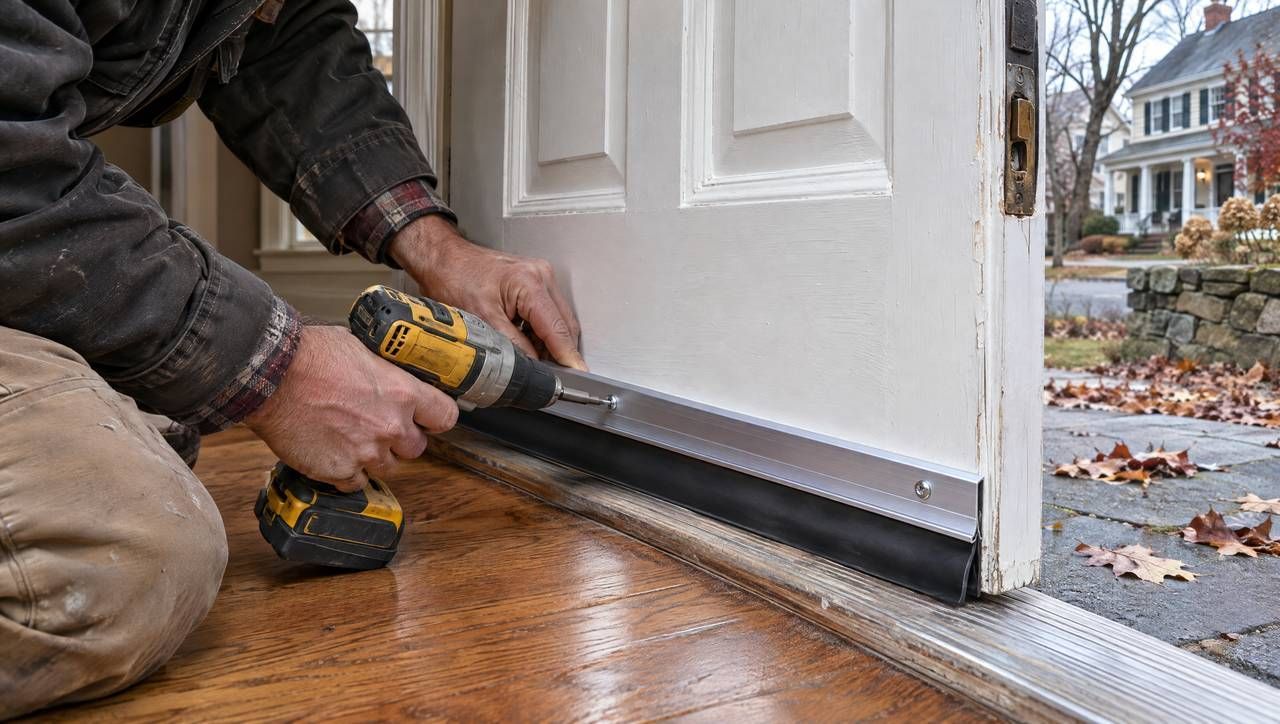
A face-mounted sweep is an aluminum or vinyl strip with a rubber fin or brush that screws onto the inside face of the door. A door bottom is a U-shaped channel or slide-in seal that fits the bottom edge, which is what most steel and fiberglass doors use. If your door has two slots along its bottom edge, buy the matching slide-in replacement.
How to Install a Door Sweep
Door sweep installation takes about 30 minutes:
- Measure: Measure the inside face of the door from edge to edge.
- Cut: Trim the sweep with a hacksaw or utility knife, slightly short of full width so it clears the frame.
- Position: With the door closed, hold the sweep so the seal just touches the threshold without folding flat.
- Fasten: Mark the holes through the slots, drill small pilot holes and screw it on.
- Test: Open and close the door several times. It should brush the threshold lightly and clear any rugs.
The slotted holes let you fine-tune the height afterward with the dollar bill test.
Adjusting the Threshold
Many prehung doors have an adjustable threshold, with screws (often under small plastic caps) along the raised center strip. Turn them a quarter turn at a time to raise the strip until it meets the door bottom evenly. Too high and the door drags and the seal wears out fast. If the threshold is cracked, loose or soft underneath, adjustment will not help, and water damage below is a likely cause.
Adjusting the Strike Plate and Hinges So the Door Seals
If the dollar bill still slides out with fresh seals, the door is not pressing against them. Look at the hardware.
Strike Plate Adjustment
The strike plate is the metal plate on the frame that catches the latch, and its position sets how tightly the door pulls against the latch-side seal. Many have a small tab you can bend slightly toward the stop with a flat screwdriver. Bend a little at a time, because too much makes the door hard to close.
If that is not enough, the plate can be moved closer to the stop. That means filling the old screw holes, widening the recess with a chisel and drilling new holes, and a few millimeters off can leave the door rattling.
Fixing a Sagging Door
A door that rubs at the top latch corner, or shows a wider gap at the top than the bottom on the latch side, is sagging. Tighten every hinge screw first. Then replace one short screw in the top hinge with a 3-inch screw that reaches the framing behind the jamb. Snugging it pulls the door back toward the hinge side and often closes the latch-side gap, but do not overtighten or you can bow the jamb. Worn or bent hinges are a quick swap for a handyman.
Sealing the Outside: Trim Caulk and Storm Doors
Some drafts never touch the door. They come through gaps around the frame.
Caulking the Exterior Trim
Outside, check the joint where the exterior trim meets the siding or brick. Freeze-thaw cycles open these joints over time. Scrape out cracked caulk, clean the joint and run a fresh bead of exterior-grade, paintable sealant. Check the minimum application temperature on the tube and pick a mild late-fall afternoon. Leave any small drainage gaps at the bottom of the trim open.
If the smoke test showed air moving around the interior trim, the gap between the frame and the wall framing may be empty. Removing the casing lets you fill it with low-expansion foam made for windows and doors. Standard expanding foam can push the jamb inward and bind the door.
Is a Storm Door Worth Adding?
A storm door adds a second layer of glass and seals, cutting drafts and shielding the entry door from wind-driven rain and snow. It suits exposed entries that take the brunt of nor'easters.
One caution: a glass-heavy storm door on an entry in direct afternoon sun can trap heat and damage the main door's finish, so check your entry door manufacturer's guidance first. Our storm door selection guide for NJ homes covers styles, glass and venting in more detail.
When a Drafty Front Door Needs Replacement
Sometimes new seals and adjustment cannot help, because the door or frame has failed. These are the signs we look for:
- Rot at the bottom of the frame: Press a screwdriver into the lower jamb and trim. Soft or crumbling wood means water has been getting in for a while.
- A warped slab: A door that touches at the top and bottom but gaps in the middle has bowed, and no weatherstripping can close that.
- Failing skin or core: Steel doors rusting through at the bottom and cracked fiberglass doors no longer insulate well.
- A soft sill: If the threshold flexes underfoot or the floor below it is damp, the damage goes beyond the door.
Not every one of these means a new door. A rotted section of jamb or trim can often be cut out and replaced, which is part of our damage repair work. A sound wood door with a weathered finish may just need refinishing, since cracked finish lets in the moisture that causes warping, and our door staining service restores that protection.
When the slab is warped and the frame is rotted, a new prehung door is usually the practical fix, because the frame, threshold and seals arrive fitted together. We see this often in older homes in Bernardsville, Basking Ridge and Warren. If the same house has a drafty back slider, our guide to patio door installation in NJ explains that project.
When to Call a Professional
Most homeowners can handle the diagnosis, foam tape, a screw-on sweep and a threshold adjustment. Call a pro when the job involves cutting, mortising or structural repair: moving a strike plate, replacing a rotted jamb or sill, rehanging a door that has shifted badly, or installing a prehung door, where small shimming errors create the very drafts you are trying to stop.
If your sidelights or nearby windows feel cold too, our guide to insulating windows before winter has quick fixes, and when frames are beyond saving, we offer window replacement. For the rest of an older house, see our guide to preventive maintenance for aging Somerset homes.
Frequently Asked Questions
How do I know if my front door weatherstripping needs replacing?
Close the door on a dollar bill at several points around the frame. If it slides out easily, or you can see daylight at the edges, the seal is not doing its job.
What is the best weatherstripping for an exterior door?
It depends on the frame. If the door stop has a slot, a kerf-in compression bulb is usually the best and longest lasting choice. Older wood doors without a slot do well with V-strip, and foam tape is a short-term option.
How long does door sweep installation take?
A screw-on sweep takes about 30 minutes with a tape measure, hacksaw or utility knife, drill and screwdriver.
Why is my front door still drafty after new weatherstripping?
The door may not be closing tightly against the new seal. Check the strike plate, look for hinge sag, and test under the door and around the exterior trim. A warped slab can also leave gaps that no seal can close.
Should I repair or replace a drafty front door?
Repair it if the door and frame are solid and the problem is worn seals, a loose sweep or hardware out of adjustment. Replacement makes sense when the slab is warped, the frame or sill is rotted, or the door still leaks after everything has been adjusted.
Get Your Front Door Ready for Winter
A few hours on the seals, sweep and hardware can make your entry noticeably more comfortable this winter. If you would rather hand it off, or you suspect the door or frame has reached the end of its life, contact Jeff of All Trades to schedule a visit anywhere in Somerset County, from Hillsborough to Bedminster.