
Sheetrock Patch Steps to Hide Holes & Cracks Quickly | New Jersey Home Guide

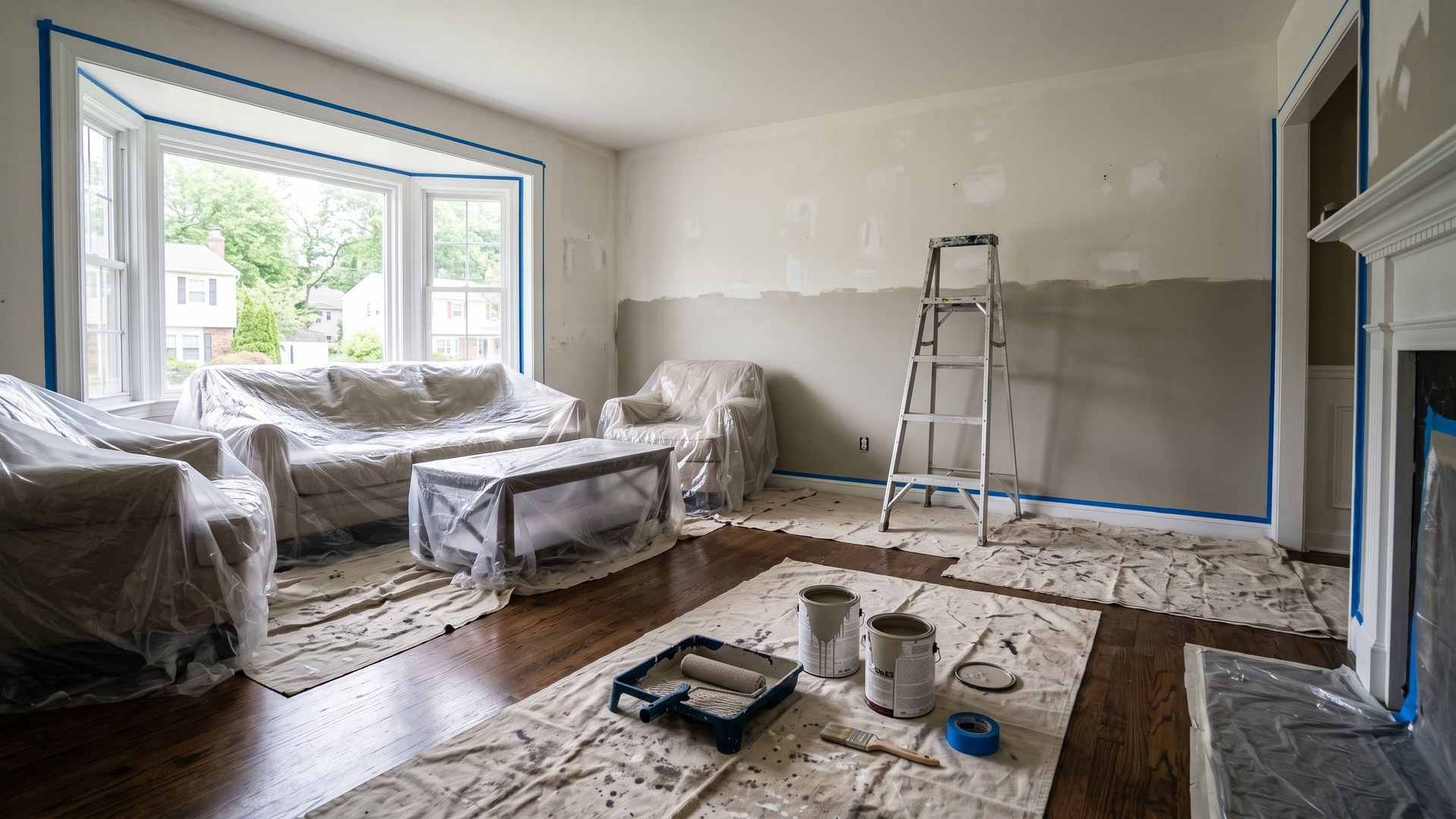
Between the old plaster-and-lath walls in a Montclair colonial and the modern Sheetrock in a Hillsborough development, New Jersey walls take a beating. One minute, a banging radiator pipe causes a stress crack; the next, a stray soccer trophy leaves a dent. Those dings, holes, and cracks are frustrating, but most are fixable with the right tools and techniques. This guide gives you the confidence to tackle those repairs yourself and restore the flawless finish your home deserves.
Supplies & Tool List for Most Repairs
Here’s what you’ll need for a well-stocked drywall repair kit. Prices are typical for a New Jersey hardware store.
- Joint Compound: All-purpose or topping compound ($10 for a small tub)
- Fast-Drying Spackle: For quick hairline crack fills ($8)
- Fiberglass Mesh Patch: For small holes ($7 for a 4-inch patch)
- Paper Drywall Tape: For larger repairs and corners ($5 per roll)
- Drywall Knives: A 6-inch and a 10-inch knife are essential ($10–$15 each)
- Utility Knife: With fresh blades ($12)
- Sanding Sponge or Block: Medium (120-grit) and fine (220-grit) ($6)
- Drywall Saw: For cutting out damaged sections ($15)
- Scrap Sheetrock & 1x3 Wood: For larger holes (varies, often scrap is free)
- Primer: A quality stain-blocking primer like Kilz or Zinsser ($15 per quart)
Which Repair Method is Right for You?
Not all wall damage is the same. Use this table to quickly identify the best approach, the time commitment, and the skill level required to
fix wall holes fast.
| Damage Type | Best Method | Time to Complete | Skill Level | Material Cost |
|---|---|---|---|---|
| Hairline Crack | Flexible Spackle / Caulk | 15 minutes | Beginner | $8 |
| Nail Pop | Reset Screw & Compound | 30 minutes (plus dry time) | Beginner | $10 |
| Small Hole (<2″) | Mesh Patch & Compound | 1 hour (plus dry time) | Beginner | $17 |
| Medium Hole (2–6″) | California Patch | 1.5 hours (plus dry time) | Intermediate | $10 |
| Large Hole (6–12″) | Backer-Board & New Piece | 2 hours (plus dry time) | Intermediate | $25 |
| Corner Bead Damage | Scrape, Re-tape, & Mud | 2 hours (plus dry time) | Advanced | $15 |
Step-by-Step: Hairline Crack in 15 Minutes
Those annoying vertical cracks that appear over doorways are common in NJ homes due to seasonal expansion and contraction. First, gently widen the crack with the corner of a utility knife to create a small "V" groove. This gives the filler something to grab onto. Wipe the area clean. For a fast fix, use a flexible, paintable caulk or a lightweight spackle. Apply it with your finger or a small putty knife, pressing it firmly into the groove. Smooth it flush with the wall. Wipe away any excess with a damp cloth. Since it’s flexible, it’s less likely to re-crack. Once dry (check the label), you can touch it up with your paint.
Step-by-Step: Nail Pop Fix Without Re-painting Whole Wall
Nail pops are a classic sign of a house settling. Don't just mud over it. First, drive a 1 ¼-inch drywall screw about an inch above and below the popped nail head to re-secure the Sheetrock to the stud. Drive the screws just enough to create a slight dimple, without breaking the paper surface. Now, you can either pull the old nail out or use a nail set to recess it below the surface. Apply two thin coats of joint compound over the dimples and the old nail spot, letting each coat dry. Sand lightly. For the touch-up, dab your Benjamin Moore OC-65 Chantilly Lace with a small artist's brush just on the patch. Then, use a nearly dry roller to lightly blend the texture at the edges.
Your Guide to the Perfect Sheetrock Patch NJ
Whether you're dealing with a doorknob punch or a moving-day mishap, a solid patch is key. Here are the pro-approved methods for different hole sizes.
Small Hole (<2″): Mesh Patch & Fast-Dry Mud
This is one of the most common drywall repair tips. Start by cleaning any loose debris from around the hole. Lightly sand the area to create a smooth surface. Apply a self-adhesive fiberglass mesh patch directly over the hole, ensuring it lies completely flat. Using your 6-inch drywall knife, apply a thin, tight coat of joint compound over the mesh. Press firmly to force the compound through the mesh and fill the hole behind it. Feather the edges outward. Let it dry completely. Apply a second, wider coat, extending about 2 inches beyond the first. Let it dry, then sand smooth with a 220-grit sponge—Prime the spot before painting to prevent "flashing," where the patch shows through the paint.
Medium Hole (2–6″): The California Patch
The California Patch (or "butterfly patch") is a slick method that avoids the need for tape. Cut a new piece of Sheetrock about 2 inches larger than the hole in both dimensions. On the back of the patch, score a line 1 inch from each edge. Snap the gypsum core along the score lines, but leave the front paper intact. This creates a patch with a sturdy center and paper flaps. Test fit the center portion into the hole. Apply a thin layer of joint compound around the hole's perimeter. Press the patch into place, embedding the paper flaps into the wet compound. Smooth the flaps down with your 6-inch knife. Apply a skim coat over the entire patch and let it dry before applying a final, wider coat.
Large Hole (6–12″): Backer-Board + New Sheetrock
For a large hole, you need to add structural support. Cut the damaged area into a clean square or rectangle using a drywall saw. Cut a piece of 1x3 wood about 4 inches longer than the hole's width. This is your backer board. Slide it into the hole and pull it tight against the back of the drywall. Secure it in place by driving drywall screws through the existing wall and into each end of the backer board. Now, cut a new piece of Sheetrock to fit snugly into the opening. Fasten the new patch to the backer board with more screws. From here, the process is like finishing a new seam: apply paper tape over the joints, embed it with compound, and apply two or three more coats, feathering each one wider than the last.
Pro-Level Finishing Tricks
- Feather with a 10-inch Knife: After your initial coats with a 6-inch knife, switch to a 10-inch or 12-inch knife for the final coat. This allows you to feather the compound over a much wider area, making the repair virtually invisible after sanding.
- The Damp Sponge Trick: To drastically reduce dust, skip the final sanding. After the last coat is dry, use a slightly damp sponge to smooth the compound and blend the edges. This "wet-sanding" technique gives a perfect finish with about 60% less airborne dust.
- Matching Texture: Many NJ homes have textured walls. For a light "orange peel" common in Bergen County, use aerosol texture spray. For a heavier "knock-down" texture seen in some Somerset County homes, spray the texture, then gently flatten the peaks with a wide drywall knife. Practice on cardboard first!
Cost & Time: DIY vs. Hiring a Pro for Sheetrocking
Let's imagine a standard 10-foot-by-12-foot room with three quarter-sized holes.
- DIY Approach: You'll spend around $150–$225 on tools and materials if you're starting from scratch. The work will take you a weekend, accounting for multiple drying times.
- Hiring a Pro: A professional Somerset County handyperson or drywall specialist will likely charge $350–$550 for the same job. The benefit? It’s done in 1-2 visits, the finish is perfect, and there’s no mess for you to clean up.
Common Sheetrocking Mistakes to Avoid
- Piling on Compound: Apply thin coats. Thick coats take forever to dry and are prone to cracking and shrinking.
- Sanding Too Soon: If the compound feels cool to the touch, it's still wet. Sanding wet compound will gum up your sandpaper and ruin the finish.
- Skipping Primer: Unprimed patches will absorb paint differently, leaving a dull, noticeable spot. Always prime.
- Using a Dull Blade: A dull utility knife will tear the drywall paper, making a clean patch impossible. Change blades often.
A Critical Note on Safety & NJ Compliance for Sheetrocking
If your home was built before 1978, your walls could contain lead-based paint. Disturbing it through sanding can create hazardous lead dust. New Jersey has strict rules for this. Do not scrape or sand without testing first. You can get a lead test kit at most hardware stores. If lead is present, the repair must be done using lead-safe work practices as outlined by the EPA and referenced by the NJDEP. This is a job best left to a certified professional. Also, always dispose of drywall dust in a sealed bag; do not vacuum it with a standard household vacuum.
Local Pro Tip: Before you start chasing that hairline crack across your ceiling for the third time, give us a call. Recurring cracks, especially on ceilings or between an old plaster wall and a newer Sheetrock addition, often signal a deeper structural or moisture issue. A simple sheetrock patch NJ job is a temporary fix. An experienced eye can diagnose the root cause, saving you from a repair that fails in six months.
FAQs: Sheetrock Patch
Can I use spackle instead of joint compound?
For tiny pinholes or very fine hairline cracks, a lightweight spackle is fine. For anything larger, especially jobs requiring tape, you must use joint compound. Spackle is brittle, shrinks, and doesn't have the adhesive strength of joint compound.
How long before I can repaint with latex paint?
After the final sanding and priming, you should wait for the primer to fully dry. Most quality primers are ready for a topcoat in 1-3 hours. Check the can for the manufacturer's specific recommendation.
Will cold garages below 50°F delay drying?
Absolutely. Joint compound dries through evaporation. Cold, damp conditions, like those in a typical New Jersey garage in winter, can triple the drying time. Aim for a temperature of at least 55–60°F and use a fan to improve air circulation.
Should I tape a vertical crack that keeps returning?
Yes. If a crack keeps coming back, it's a "working" crack, meaning there's movement in the structure. Simply filling it won't work. You need to apply paper drywall tape or a flexible fiberglass tape over the crack and embed it in joint compound. This bridges the gap and reinforces the area against future movement.
Get Your Walls Looking Perfect Again with Sheetrock Patches
Don't let drywall damage detract from the beauty and value of your home. For a flawless, professional finish without the hassle and mess, trust the experts at Jeff Of All Trades Home Improvement. With 20 years of experience, we provide reliable sheetrock patching services in NJ and are your go-to solution for all home repairs.
We proudly serve Bedminster, Basking Ridge, Bernardsville, Far Hills, Gladstone, Hillsborough, and Warren.
- Call for Your Free Estimate: 908-963-3533
- Email: jeffofalltradeshandymanservice@gmail.com