
How to Winterize a Deck in New Jersey Before the First Snow
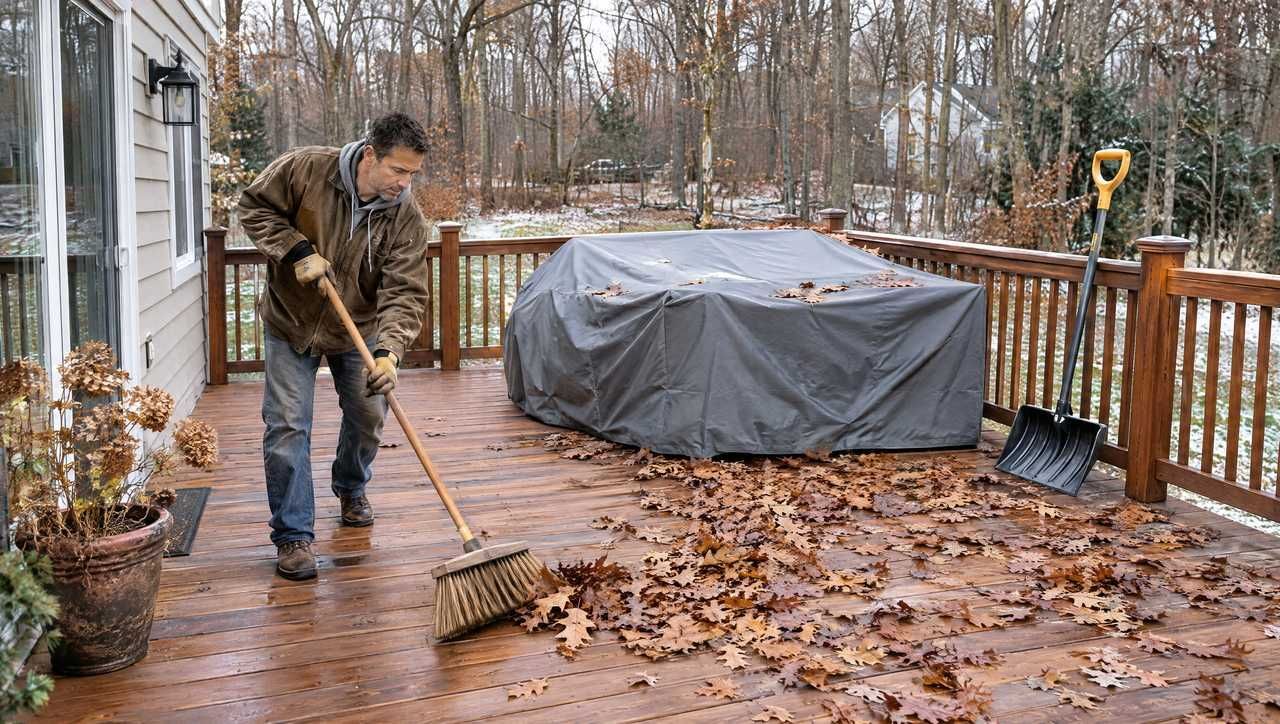
A deck takes more punishment between December and March than it does all summer. Wet leaves sit on the boards for weeks, snow piles up against the railings, and the freeze-thaw cycles that New Jersey is known for work water into every crack and fastener hole. By spring, a deck that looked fine in October can have soft spots, loose posts and stains that will not scrub out.
The good news is that learning how to winterize a deck takes one weekend afternoon and a short checklist. You need to get the deck clean, find small problems before snow hides them, and keep moisture from sitting on the surface all season.
This guide covers each step in the order we recommend, how composite differs from wood, which repairs can wait until spring, and when to call a pro.
Why Deck Winter Maintenance Matters in Somerset County
Most deck damage in our area comes from water that never quite dries out. Wood absorbs moisture, freezes, expands and thaws many times a winter. Each round opens the grain a little more, loosens fasteners, and gives rot a foothold where the wood stays damp longest.
Older homes in Basking Ridge, Bernardsville and Warren often have decks that were added in the 1980s or 1990s, sometimes with framing details that would not pass today. Those decks tend to show their age first at the ledger board (where the deck attaches to the house), at stair stringers, and around post bases that sit in wet soil.
A little deck winter maintenance in November means a light wash in April instead of a list of repairs. It also lowers the odds of a loose railing or soft stair tread causing a fall on an icy morning.
Step 1: Clear Debris and Wash the Deck
Move everything off the deck so you can see the whole surface, then sweep or blow off leaves, needles and dirt. Wet leaves are the biggest problem: a mat left in place for a month holds moisture against the wood and leaves dark tannin stains.
Clean Out the Gaps Between Boards
The gaps between boards let water drain and air move underneath. When they fill with packed debris, the board edges stay wet. Run a putty knife or deck gap tool along each gap to push debris through, then finish with a leaf blower.
Check Underneath and Above
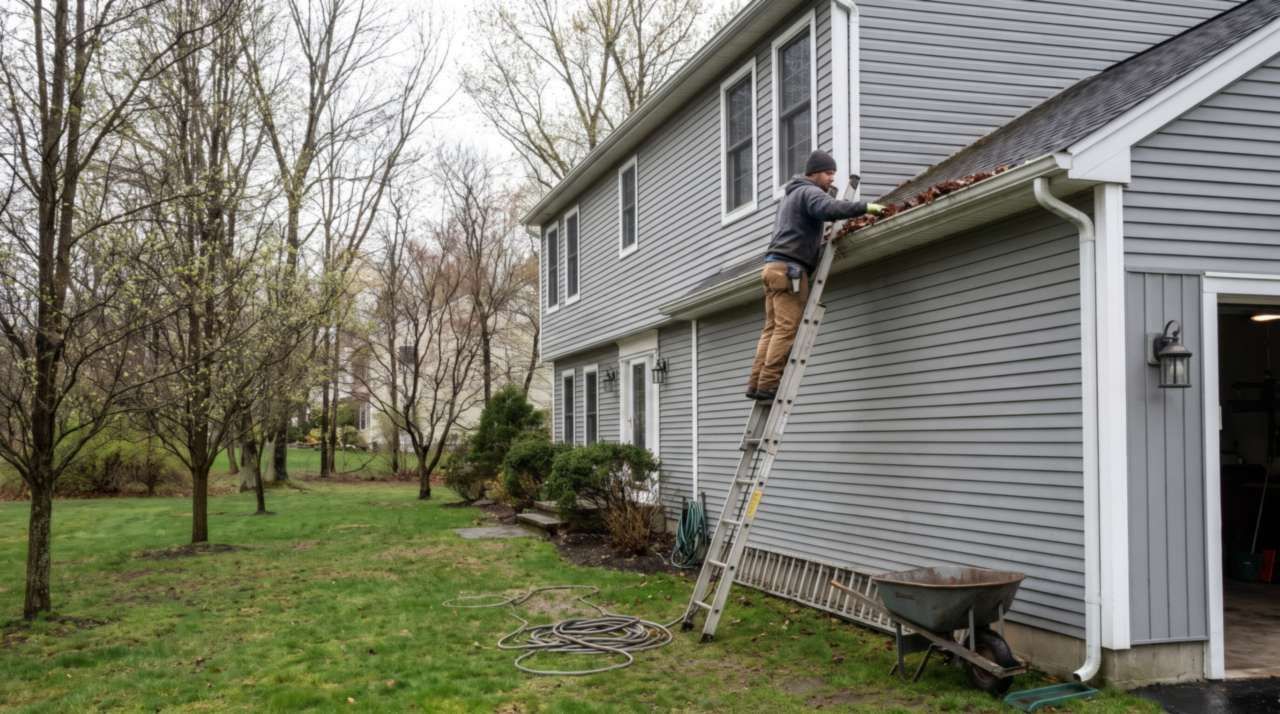
Rake out leaves piled against posts and the foundation under the deck. Then look up at the gutters. Overflowing gutters that dump water onto one spot all winter are a common cause of rot, and our guide to a gutter cleaning schedule for tall homes covers how often to clean them.
Wash the Surface
Mildew, algae and ground-in dirt hold moisture and make the surface slippery in the cold. A deck cleaner made for your decking type, a stiff synthetic brush and a hose handle most decks.
If you use a pressure washer, keep the pressure low and the tip moving with the grain. Too much pressure raises the wood fibers and leaves gouges that soak up more water. Our pressure washing checklist for siding, decks and driveways explains safe settings and what to avoid.
Let the deck dry completely before sealing. In November that can take two days or more in shaded areas.
Step 2: Inspect for Winter Problems Before Snow Hides Them
Snow will cover everything for months, so look closely now. Walk the deck slowly, then check the structure from below if you can:
- Soft boards: Press a screwdriver into dark or spongy spots near the house, under planters and at board ends. If it sinks in easily, the wood is likely rotting.
- Popped nails and loose screws: Freeze-thaw cycles push nails up. Replace them with deck screws that hold.
- Loose railings: Push firmly on each post and section. Any wobble is a safety issue on an icy deck.
- Ledger board problems: Where the deck meets the house, watch for gaps, rust streaks, missing flashing and staining on the siding or foundation below.
- Stair trouble: Treads should be solid, stringers sound at the bottom, and the stairs steady underfoot.
- Posts and hardware: Look for rot at post bases, posts that have heaved or tilted, and joist hangers or bolts flaking with rust.
For a longer list of what each symptom means, read our article on deck repair warning signs in Somerset County. Photograph anything you find so you can compare in spring.
Step 3: Seal or Stain on a Dry Day, or Wait Until Spring
A sealed wood deck sheds water instead of soaking it up. Sprinkle some water on the boards: if it darkens the wood and soaks in within a minute or so, the old finish is worn out.
Timing Is Everything
Every sealer and stain has a minimum application temperature printed on the label, and many also require that temperature to hold for a full day or more while the finish cures. Many products list a minimum around 50 degrees, but check yours. You also need a dry forecast, a deck that has dried out completely after washing, and no frost expected overnight.
In Somerset County, those conditions usually run out sometime in November. If you cannot find a mild, dry stretch, wait until spring. Stain put down on cold or damp wood can stay tacky, peel early or trap moisture.
Choosing the Right Product
Penetrating semi-transparent stains tend to hold up better on deck boards than thick solid stains, which can peel. For more detail, see our guide to the best deck stain for a humid New Jersey climate.
Step 4: Move or Cover Furniture, Grills and Planters
Anything left on the deck all winter creates a damp spot underneath. Planters are the worst offenders, since wet soil and standing water can start rot or leave a permanent ring on composite.
- Planters: Move them off the deck or raise them on pot feet. Empty the saucers.
- Furniture: Store cushions indoors and move furniture to a shed or garage if you can. Otherwise use breathable covers.
- Grills: Keep grills away from siding and railings. If yours will sit unused, follow the manufacturer's directions for the propane tank and cover it.
- Rugs and mats: Pull up outdoor rugs. They trap moisture and leave discolored patches.
Snow Removal Without Damaging Your Deck
Heavy, wet snow from a nor'easter adds up quickly, and so does ice from melting and refreezing. Clearing it also keeps the boards from sitting wet for weeks.
Use the Right Shovel
Use a plastic shovel with no metal edge, and push along the length of the boards instead of across them. Pushing across catches the edges and can gouge wood or scratch composite. Leave a thin layer and let the sun finish the job. Never use a snowblower or ice chipper on a deck.
Choosing an Ice Melt
Rock salt (sodium chloride) is cheap but can be hard on wood fibers, plantings and metal hardware. Products based on calcium magnesium acetate are generally considered gentler on wood and plants. Many composite manufacturers say calcium chloride is acceptable on their boards, but rules differ by brand.
Check your decking manufacturer's care guide before you buy, use as little as you need, and sweep up the residue once the ice is gone.
Composite vs. Wood: How to Winterize a Deck by Material
Wood Decks
Wood needs the most attention. Rot is the main threat, so focus on clean gaps, a sound finish, no standing water and quick repairs to soft spots.
Composite Decks
Composite boards do not need sealing and do not rot like wood. They can still grow mildew in shaded spots and stain from leaves, rusty furniture and ice melt residue. Use a manufacturer-approved cleaner and follow the brand's shovel and ice melt guidance.
Most composite decks sit on a wood frame, so the joists, ledger and posts still need the same inspection as any wood deck.
What to Repair Now and What Can Wait Until Spring
Fix now, before winter:
- Loose or wobbly railings and posts
- Soft or cracked stair treads and damaged stringers
- Popped nails or raised screws that create a trip hazard
- Any sign of ledger trouble, such as gaps, sagging or water staining at the house connection
- Boards that are soft enough to give underfoot
Can usually wait until spring:
- Surface staining and graying
- A worn finish, if the weather will not allow proper sealing
- Small surface checks and splits that are not getting deeper
- Cosmetic board replacements away from walking paths
Spring is also a good time for bigger changes. If your deck stairs end at a muddy path, take a look at our custom walkways page for ideas.
When to Call a Professional for Deck Repairs
Swapping a cracked board is a reasonable homeowner task. Structural problems are not. Call a pro if you find:
- Ledger issues: Rot, loose fasteners, missing flashing or the deck pulling away from the house.
- Rotted joists or beams: Soft framing may not hold the weight of snow.
- Leaning or rotted posts: These carry the whole load.
- Bouncy or sagging sections: Movement underfoot usually points to a framing problem.
- Shifting stairs or soft stringers: Stairs are a common place for deck injuries.
Our handyman services cover smaller repairs like railings, boards and fasteners, while our damage repair team handles rot, storm damage and structural issues.
If a storm damages your deck or a railing gives way mid-winter, we offer 24-hour emergency home repair to make it safe until a full repair is done.
Frequently Asked Questions
When should I winterize my deck in New Jersey?
Late October through mid-November is usually the best window in Somerset County, while there are still dry, mild days for cleaning and sealing. If you miss it, you can still clean, inspect and clear the deck any time it is free of snow.
Is it too cold to stain my deck in November?
It depends on the product and the forecast. Check the label for the minimum application temperature and how long that temperature needs to hold while the finish cures. If you cannot get a dry stretch above that minimum, wait until spring instead of risking a finish that peels or stays tacky.
Can I use rock salt on my deck?
Rock salt can be hard on wood, nearby plants and metal fasteners, so it is not our first choice. Products based on calcium magnesium acetate are generally gentler, and some composite brands approve calcium chloride. Check your decking manufacturer's care guide and sweep up residue once the ice melts.
Should I cover my deck with a tarp for winter?
We do not recommend it. A tarp traps moisture against the boards and blocks airflow, which encourages mildew and rot. A clean deck with clear gaps, kept free of heavy snow, holds up better.
Do composite decks need winter maintenance?
Yes, though less than wood. Composite boards do not need sealing, but they still need cleaning, clear gaps and the right shovel and ice melt. The wood framing underneath most composite decks also needs the same inspection for rot and loose hardware as any wood deck.
Get Your Deck Ready Before the Snow Arrives
A few hours of cleaning and inspection now can save you from a much bigger repair in spring. If your inspection turned up soft boards, a loose railing or anything that worries you at the ledger or stairs, we can take a look and fix it before winter sets in. Contact Jeff of All Trades to schedule a deck inspection or repair.