

Electrical Panel Upgrades That Lower New Jersey Home-Insurance Costs
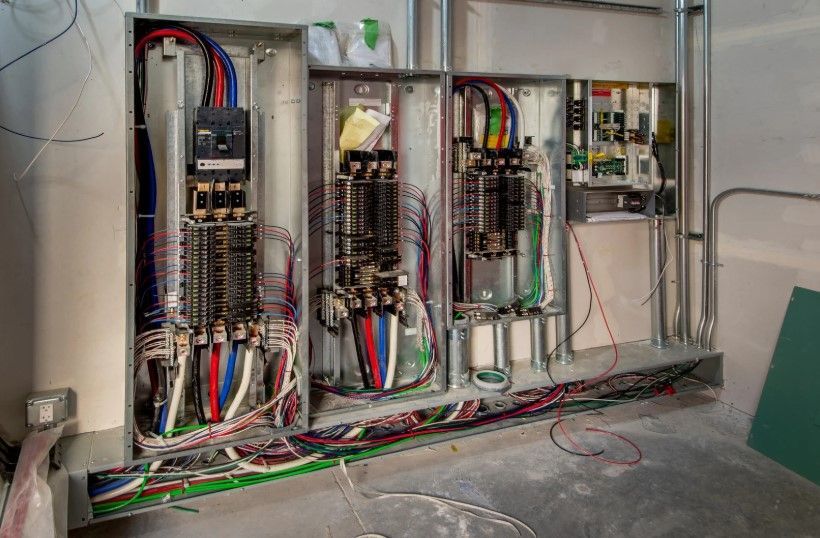
Open the steel door on most 1960s New Jersey split-levels and you’ll still find a 60- or 100-amp fuse box humming along like a vinyl record player in the age of Spotify. Beyond the inconvenience—running the microwave trips the same circuit as the toaster—old panels worry insurance actuaries far more than they bother homeowners. Fire claims caused by obsolete electrical systems average $48,012 in payouts statewide, according to the 2024 ISO Home Safety Report. That’s why carriers quietly add a surcharge—usually 5–10 %—to policies covering homes with antiquated service.
Upgrading to a modern breaker panel isn’t only about convenience; it’s one of the few capital projects that can both raise resale value and lower recurring expenses. This authoritative guide unpacks everything Garden State homeowners need to know: amperage sizing, AFCI/GFCI technology, New Jersey electrical code, and documented premium reductions.
Amperage 101: Why 200 Amps Is the New Baseline
What Amperage Really Means
Amperage is the maximum current your service can deliver without meltdown. Think of it as the diameter of a highway: more lanes, fewer traffic jams.
- 60 amps – Common in pre-1965 homes; safe for lights and a few outlets, but prohibits central A/C or EV chargers.
- 100 amps – 1970s standard; borderline for electric dryers + HVAC.
- 150–200 amps – Today’s norm; supports heat pumps, induction ranges, and future solar back-feed.
- 225–400 amps – Large custom homes or dual EV fast chargers.
Insurance underwriters flag any service under 100 amps as “capacity-limited,” a euphemism for overheated conductors. Hanover and Travelers both impose a $75–$125 annual surcharge on such properties.
Load Calculation Snapshot
NEC Article 220 outlines the formula, but here’s a thumbnail for a 2,100-sq-ft colonial with an electric dryer and a 3-ton heat pump:
- General lighting: 3 VA × sq ft = 6,300 VA
- Small-appliance & laundry circuits: 3,000 VA
- Dryer: 5,000 VA
- HVAC: 4,800 VA
120/240 split & demand factors bring the service load to ~95 amps. Code requires 125 % capacity → 118 amps. A 150-amp panel technically works, but a 200-amp panel future-proofs for an EV charger or hot tub.
Safety Devices Your Carrier Wants to See
GFCI (Ground-Fault Circuit Interrupter)
- Trips in 1/40-second when the current strays off the hot conductor.
- Required in baths, kitchens, garages, and outdoor receptacles (NEC 210.8).
- Reduces shock fatalities by 83 % per CPSC data.
AFCI (Arc-Fault Circuit Interrupter)
- Detects arcing (sparks) from loose connections, extension-cord damage, or chewed Romex.
- Required on most 120-V branch circuits in bedrooms, living rooms, and finished basements (NEC 210.12).
- Cuts the electrical fire hazard by 50 %. Many insurers now ask during renewal, “Are bedroom circuits AFCI-protected?” A “yes” can translate to a 2–4 % credit.
Dual-Function Breakers
Modern Square D and Eaton panels offer AFCI + GFCI in one breaker, perfect for kitchens with appliance motors near water sources—bonus points with underwriters.
New Jersey Code & Permitting Cliff Notes
- Permit Authority – Your township construction office; expect $75–$200 filing fee.
- Licensed Contractor – NJ requires a state “Electrical Contractor License” (34EI). DIY service upgrades are illegal.
- Service Disconnect – New Jersey amendment to NEC 230.85 mandates an exterior emergency disconnect on new services—insurers love it for firefighter safety.
- Inspection Sequence
a. Rough service mast & meter pan (if relocated)
b. Final panel, bonding, labeling
Average turnaround:
7–10 business days in Somerset and Hunterdon counties; up to 20 days in coastal zones during summer.
Dollars & Sense: Cost vs. Insurance Savings
| Component | Typical Cost | Notes |
|---|---|---|
| 200-Amp Panel & Main Breaker | $650–$900 | Square D QO or Eaton BR |
| Service Entrance Cable & Meter Pan | $450 | Copper SEU 4/0 AL if local utility allows |
| Labor (licensed electrician) | $2,200–$3,500 | Includes permit, inspection, 8–12 hrs, 2 workers |
| Misc. (ground rods, bushings, labels) | $150 | N/A |
Total Investment: $3,300–$5,000 (2025 central NJ averages)
Sample Insurance Impact
Pre-upgrade premium:
$1,550/year on $450k dwelling (Allstate).
Post-upgrade credits: –$100 (capacity), –$55 (AFCI/GFCI), –$35 (exterior disconnect)
New premium: $1,360/year →
$190 saving
Simple payback: 5,000 / 190 ≈ 26 years on premiums alone—meh. But add:
- Reduced fire risk (deductible avoidance)
- Higher resale value (appraisers add $2k–$4k for 200-amp service)
- Capability for money-saving electric heat pumps or EV chargers
Now the ROI picture brightens.
Proof Points: Carrier Policies & Actuarial Data
- State Farm Technical Bulletin E-07 lists “Fuse panels or <100 amps” as Tier 1 hazards with a 10 % surcharge.
- USAA Home Protect+ gives a 5 % credit for “whole-home AFCI.”
- ISO Fire Suppression Rating Schedule assigns +3 risk points if no exterior disconnect—each point equates to ~$25 on the average NJ premium.
Bottom line: Insurers price electrical risk precisely; upgrade the panel, and the algorithm rewards you.
Planning Your Electrical Panel Upgrade NJ: Step-by-Step
- Get a Load Calc: Ask the electrician for the NEC 220 worksheet; it helps with the permit.
- Choose the Panel Brand: Stick with Eaton, Square D QO, or Siemens; breakers are easier to source.
- Map Circuit Migration: Label existing circuits; note lengths—some short wires may need junction boxes if panel location shifts.
- Schedule Utility Disconnect: PSE&G, JCP&L, and Atlantic City Electric need 7–10 days' notice.
- Prep for Downtime: Power is off 4–8 hours; empty the fridge, charge devices.
- Inspection & Re-Energize: Township inspector signs off; utility reseals meter.
- Send Proof to Insurer. Email upgraded permit sticker or contractor certificate—they seldom ask for photos.
Case Study: Hillsborough Ranch Raises Safety, Slashes Premium
Before: 100-amp Zinsco panel notorious for bus-bar arcing. NJM added $120 annual surcharge.
Upgrade: 200-amp Eaton plug-on-neutral panel with 18 dual-function breakers, exterior service disconnect. Cost $4,650.
After: Surcharge removed, plus $40 “protective device” credit. Annual premium down $160. Added a 7.6-kW EV charger on a 40-amp breaker eight months later—no capacity issues.
Home sold 14 months after upgrade; listing agent highlighted “new 200-amp service,” attracting three cash offers.
8. Quick-Glance Benefits & Drawbacks
| Pros | Pros | |
|---|---|---|
| Safety | Cuts arc-fault fire risk in half | - |
| Insurance | 5–18 % premium credits possible | Credits vary by carrier |
| Capacity | Future-proof for EV, heat pump | Higher short-term cost |
| Resale | Seen as an “invisible upgrade” like a roof | Some buyers overlook the behind-the-wall value |
FAQs: Electrical Panel Upgrades That Lower Home-Insurance Costs
Can I partial-upgrade by adding AFCI breakers to my old panel?
Yes, but fuse or stab-lock panels often lack the bus architecture to accept modern breakers. Insurers still penalize undersized service.
Do I need 400 amps for two EVs?
Usually not. Most Level 2 chargers draw 40–48 amps each. A 200-amp panel handles both if loads are balanced and EVs charge at night.
Is copper mandatory for service entrance conductors in NJ?
No. Aluminum alloy SER or SEU is legal and common. Utilities often specify aluminum for the meter pan; insurers care about load calculation, not conductor metal.
Will solar back-feed require another upgrade?
A 200-amp panel supports up to 40 amps of solar back-feed on a 120 % bus bar rule. Bigger arrays may need a line-side tap or 225-amp bus.
How old is “too old” for a panel?
Any fuse box, Zinsco, FPE Stab-Lok, or Challenger panel is flagged by insurers. If your breakers feel hot or trip randomly, upgrade regardless of age.
The Authoritative Bottom Line
In the “electrical panel upgrade NJ” decision tree, run the numbers like an underwriter would:
- Assess capacity—100 amps is 1980 technology, 200 amps is 2035-ready.
- Layer safety—AFCI and GFCI breakers aren’t code luxuries; they’re insurance discounts waiting to happen.
- Document everything—Permits, invoices, and inspection stickers translate directly into premium credits.
Yes, the upfront cost stings more than a December JCP&L bill, but the payoff spans lower insurance, higher resale, and a safer family. That’s an investment no spreadsheet can fully price.
Ready for your own upgrade?
Contact Jeff’s Home Improvement now!