

Exterior Painting Prep: The Steps That Make Color Stay Vibrant for Years

A fresh coat of paint can add real value to your home’s curb appeal, but the biggest difference-maker isn’t the paint itself—it’s what you do before the first brush ever touches the siding. When the surface is clean, solid, and ready to bond, the finish looks smoother, the color reads richer, and the protection lasts longer.
That’s why many professional painters spend as much as 70% of the job on prep work. They wash away dirt and chalky residue, scrape and sand off loose paint, repair small cracks and rot, and seal everything with the appropriate primer. Skipping those steps may save time today, but it often leads to peeling, blistering, and uneven shine much sooner than expected.
If you follow the same approach, you’ll get a paint job that holds up through heat, rain, and seasonal changes. You’ll also repaint less often, which saves money and hassle over the long run. Put in the effort up front, and the results will look better now and stay that way for years.
Diagnose, Don’t Just Wash
Take a leisurely walk around the house with a pad and pen. Look for anything that might compromise a new paint job, such as dusty surfaces, mildew spots, peeling paint, protruding nails, soft or rotted boards, and even fine cracks in the foundation. For each issue you find, place a strip of masking tape on the area and make a quick note. Identifying these trouble spots now will ensure nothing is overlooked when the ladders come out.
After your inspection, it’s time to select the right cleaner. For light dirt and chalky residue, a mild, phosphate-free detergent will do the trick. If you find mildew, mix oxygen bleach with water to effectively eliminate spores without the harsh effects of chlorine. For greasy spots near the grill, use a degreaser, then rinse thoroughly to ensure the new paint adheres well.
When rinsing, be gentle. Use a 40-degree fan nozzle on your pressure washer, keep it below 1,500 psi, and hold it about a foot (around 30 centimeters) away, tilting it slightly downward. This method will lift dirt without damaging the wood and help prevent water from seeping behind the clapboards, which could lead to blistering later on.
Finally, don't rush into painting. Moisture trapped under new paint is a common cause of early failure. Make sure the siding is dry for at least two days after washing before you start painting.
Kill Mold and Mildew at the Root
Mildew spores survive ordinary detergents. After washing:
- Mix 1 part oxygen bleach with 3 parts water.
- Apply with a garden sprayer, keep the surface wet for 10-15 min, then rinse.
- Let everything dry completely; the bleach breaks down into oxygen and water—no lingering odor to haunt new paint.
Scrape, Sand, and Feather Edges
- Scraping
Use a carbide pull scraper, and keep the blade sharp. Stop once the scraper starts gliding smoothly instead of snagging—pushing past that point can dig into the wood and tear the fibers.
- Feather-sanding
Go over each scraped edge with an orbital sander and 80–120 grit paper. You’re not trying to remove a lot more material—just smooth the transition so primer bonds evenly, and you don’t end up with raised ridges that show through.
- Lead-safe steps (homes built before 1978)
Lay down 6-mil plastic to catch paint chips, wear an N-100 respirator, and follow the EPA’s RRP rules for containment and cleanup.
Fix and Fill, but Let It Move
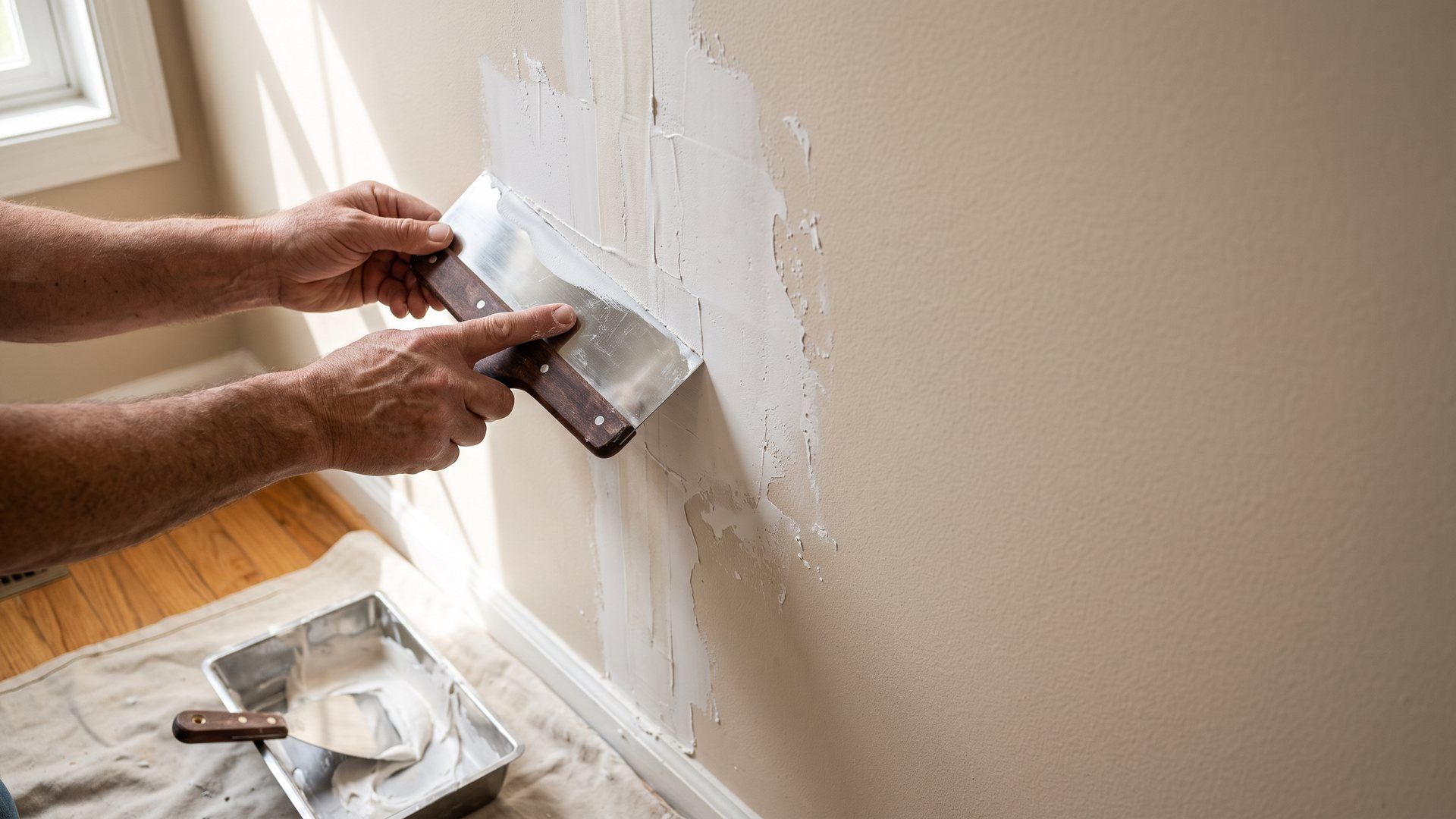
- Replace rotten boards; don’t patch them. Epoxy is for minor dents, not sponge-soft wood.
- Countersink and caulk
• Drive protruding nails home.
• Fill holes with exterior wood filler and sand flush.
• Use high-quality, paintable polyurethane or elastomeric caulk on vertical seams, but never seal the bottom edges of clapboards—water needs an exit path. - Gap control
Caulk joints up to 12 mm (½ in.). Wider gaps: install backer rod first, then caulk to achieve the correct joint depth-to-width ratio (½).
Prime Like You Mean It
- Spot-prime bare wood the same day you expose it, before dew or UV degradation starts.
- Choose the proper primer.
• Tannin-rich woods (cedar, redwood) → Stain-blocking alkyd or shellac.
• Chalky, previously painted surfaces → Acrylic bonding primer.
• Metal railings or nail heads → Rust-inhibitive primer. - Back-brush or back-roll.
Spray application is fine, but brush or roller the primer into the pores immediately after to ensure adhesion.
Mind the Moisture Meter
Paint traps any moisture within the substrate. Pros meter random boards:
- Wood siding must read ≤ 15 % MC (moisture content).
- Stucco should be < 12 %.
No meter? Wait at least three sunny days after rain before priming.
Choose Premium Topcoats—And Apply Enough
- Choose 100% acrylic latex paint. It expands and contracts with temperature changes and holds up better in the sun without becoming powdery.
- Plan on at least two coats. Paint companies rate durability based on the proper thickness, and a single thick coat doesn’t perform as well as two even layers.
- As you paint, keep a wet edge and work with the shade as it moves around the house. If you paint in direct, hot sunlight, the paint can dry too fast, which can weaken the finish.
Final Thoughts: Home Exterior Paint Prep
Ultimately, surface prep is like insurance for your paint investment. Spending a few extra afternoons washing, fixing problem spots, and priming helps the color go on smoothly, keeps the shine even, and lets the paint do its job protecting your home.
Skip those basics, and you’ll be dealing with bubbles, peeling, and flaking sooner than you think. Do it right, and years from now—five, eight, even ten—you can drive by and see your siding still looking crisp, like it was painted yesterday.
Whether you do it yourself or hire a crew, don’t let anyone cut corners on the prep work. Your budget, your free time, and your home’s curb appeal will benefit from it.
Contact Jeff of All Trades Home Improvement today for exterior paint services.