
Hardwood Floor Refinishing Costs & Dust-Control Tips for New Jersey Homes

The body content of your post goes here. To edit this text, click on it and delete this default text and start typing your own or paste your own from a different source.
Living in New Jersey means your hardwood floors endure a unique trial by fire—and ice. The dramatic swing from humid, salty summer air along the Shore to dry, centrally heated winters causes wood to expand and contract constantly. Add the fine, abrasive sand tracked in from a day in Cape May, and it’s no wonder your polyurethane finish looks hazy and worn faster than you’d expect. Those beautiful 1920s maple floors in your Montclair Victorian or the classic red oak in your Basking Ridge colonial deserve a new lease on life. This guide breaks down the process, costs, and critical health considerations for your next project.
Quick Estimate Cost Snapshot: Hardwood Floor Refinishing in NJ
The wood of refinishing a wood floor can vary based on your location, the complexity of the job, and the type of finish you choose. Generally, expect to pay more in the NYC-metro area (Bergen and Hudson counties) than in South Jersey (Camden and Gloucester counties). Here’s a typical breakdown:
| Service / Item | North Jersey (NYC Metro) | South Jersey | Notes |
|---|---|---|---|
| Labor: Sand & Poly | $4.50 – $7.00 / sq ft | $3.50 – $5.50 / sq ft | Includes sanding and three coats of finish. |
| Labor: Sand, Stain & Poly | $5.50 – $8.50 / sq ft | $4.50 – $7.00 / sq ft | Adding a stain color increases labor and time. |
| Water-Based Finish | $70 – $120 / gallon | $70 – $120 / gallon | Covers approx. 500-600 sq ft per coat. |
| Oil-Based Polyurethane | $45 – $75 / gallon | $45 – $75 / gallon | Covers approx. 400-500 sq ft per coat. |
| Typical 400 sq ft Living Room | $1,800 – $2,800 | $1,400 – $2,200 | For a standard sand & poly job. |
(Note: These are rough estimates)
A Deeper Dive into Refinishing Costs
The per-square-foot price is just the starting point. Several factors can affect your final invoice for a hardwood floor refinishing project in NJ.
- Pre-Job Repairs: Does your floor have deep gouges, pet stains, or water damage? Replacing individual boards is an art form, especially when matching the patina of 100-year-old wood. Expect to pay $50-$150 per board replacement, including labor and materials. Deep pet urine stains that have turned the wood black often require board replacement as the ammonia permanently damages the wood fibers.
- Furniture & Appliance Moving: Most contractors charge a fee to move heavy furniture or appliances, such as refrigerators and stoves. This can range from a flat fee of $200 to an hourly rate. Clarify this upfront to avoid surprises.
- Permits & Lead-Safe Work: If your home was built before 1978, federal and NJ state regulations require lead-safe work practices. Your contractor must be EPA Lead-Safe Certified. This involves specific containment procedures and specialized cleaning to prevent lead dust contamination, which can add $1-$2 per square foot to the job.
- NJ Sales Tax Nuances: In New Jersey, services like floor sanding labor are generally not subject to sales tax. However, all materials—polyurethane, stain, sandpaper, fillers—are taxed at the current state rate. A professional quote should clearly separate labor from materials.
- Seasonal Scheduling: The peak season for floor sanding NJ contractors is late spring through early fall. Booking a job in the slower winter months (January-March) might yield slightly better pricing as contractors look to fill their schedules.
The Truth About Dust: Modern Dust-Control Technologies
The fear of pervasive, lingering dust is the number one reason homeowners delay refinishing. Old methods, where a simple cloth bag was attached to the sander, were notoriously messy. Today, technology has made dustless floor sanding a clean reality.
- Traditional vs. Atomic Vacuums: A standard sander with a cloth bag might capture 60-70% of the dust. In contrast, high-powered trailer-mounted vacuum systems, like the Atomic Dust Containment System, connect directly to the sanding equipment via long hoses. These powerful vacuums generate immense suction and are parked outside your home, pulling virtually all the dust out of your home. They boast a capture rate of up to 99.8%, as certified by third-party labs.
- The HEPA Controversy: Many contractors claim to use "HEPA vacuums." However, a simple shop vac with a HEPA-style filter is not a certified HEPA machine. True HEPA filtration systems are tested and certified to remove 99.97% of airborne particles down to 0.3 microns. For homeowners concerned about silica dust (a known carcinogen regulated by OSHA) and allergens, asking for proof of a certified HEPA air scrubber is a valid request.
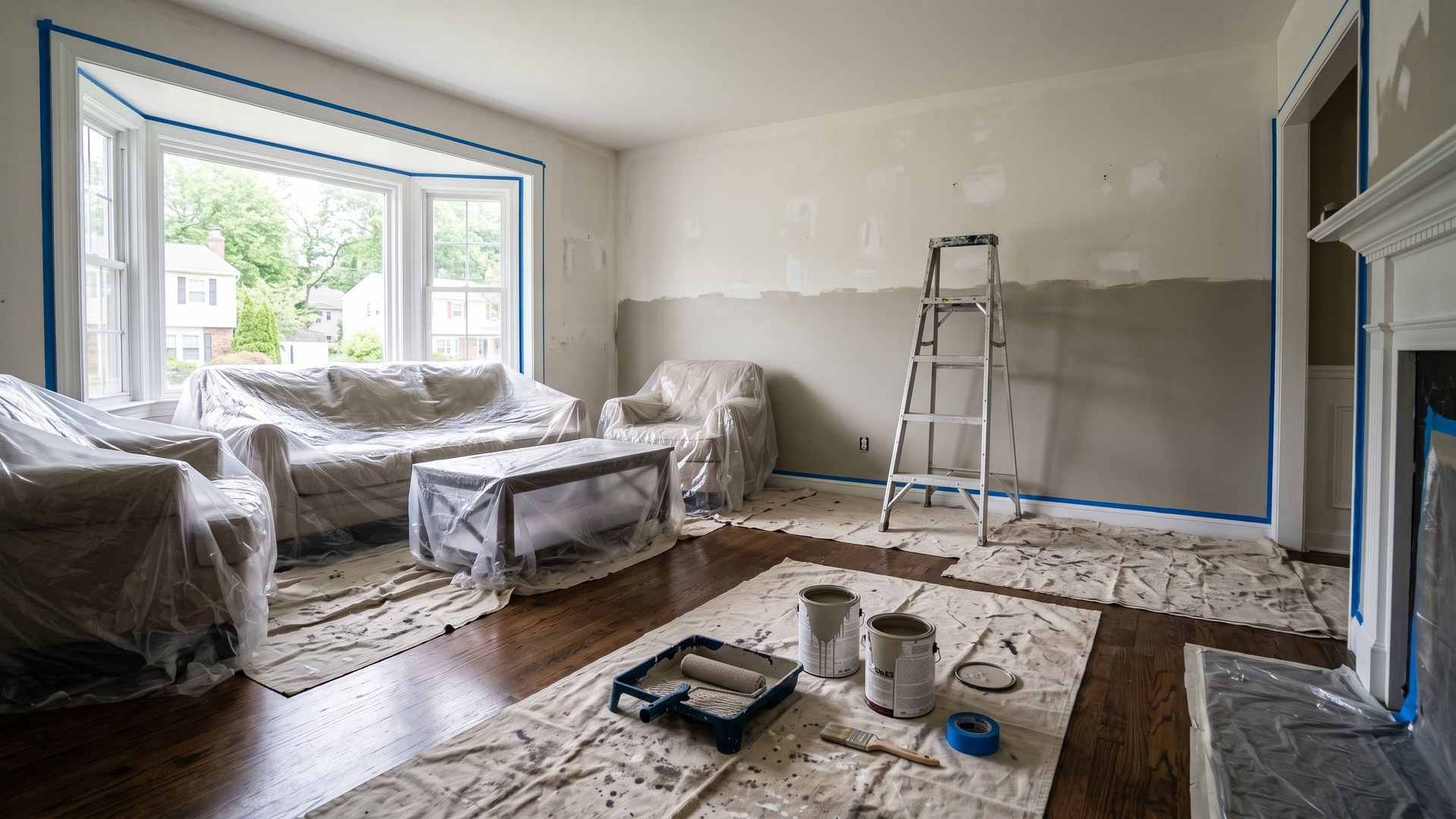
- Containment & Negative Air: For ultimate protection, professionals use plastic ZipWall barriers to completely seal off the work area. They may also employ a negative air machine. This device, often rated at 500-2000 CFM (Cubic Feet per Minute), continuously pulls air from the room, filters it, and exhausts it outside, creating a negative-pressure zone that prevents stray dust from escaping into the rest of your home.
- DIY PPE Warning: If you attempt to sand your own floors, do not underestimate the health risks. At a minimum, wear a NIOSH-approved N95 or P100 respirator, sealed safety goggles, and hearing protection.
Jeff Of All Trades Home Improvement’s 6-Step “Clean-Air Refinish” Workflow
A superior, long-lasting finish isn’t just about the products used; it’s about a meticulous, proven process. Our approach to hardwood floor refinishing in NJ focuses on durability and indoor air quality at every step.
- Moisture & Flatness Scan: Before any sanding begins, we use a professional moisture meter to test the wood's moisture content. In NJ's humid climate, this is non-negotiable. We also check for flatness to identify issues that require a more aggressive initial sanding cut.
- 180-CFM Trailer Vac Hookup: Our sanders are connected directly to a powerful exterior vacuum. This isn’t a shop vac; it’s an industrial-grade system that pulls dust out of your home the moment it’s created, keeping your air clean.
- Progressive Grit Sequence: We don’t cut corners. We use a complete progression of sandpaper grits (typically 36, 60, 80, and 100). This ensures the previous grit's scratch marks are entirely removed, resulting in a perfectly smooth surface that accepts stain and finish evenly.
- Water-Popping & Stain (Optional): For homeowners desiring a deeper, richer color, we "water-pop" the floor. This process involves lightly misting the floor with water to open the wood grain, allowing the stain to penetrate more deeply and uniformly.
- Three-Coat Finish System: We apply three full coats of commercial-grade polyurethane. For most clients, we recommend a water-based finish like Bona Mega ONE for its low VOCs and fast cure time. For those seeking a traditional amber glow, we use a high-quality oil-based polyurethane.
- Cure-Time Monitoring & Final Air Scrub: After the final coat, we leave a HEPA air scrubber running for 24 hours to capture any remaining off-gassing VOCs or settled particulates. We also provide a detailed cure schedule to protect your investment.
Finish Choices, VOCs, and Cure Times
The finish you choose impacts your home's air quality, your timeline, and the final look of your floors.
- Water-Based Finishes (e.g., Bona, Loba): These are the modern standard. They are low in VOCs (Volatile Organic Compounds), meaning fewer harsh fumes. They dry quickly, allowing for multiple coats in a single day and a faster return to everyday life. They cure to full hardness in about 7 days and remain clear, preserving the natural color of woods like maple.
- Oil-Based Polyurethane: The traditional choice, known for its durability and budget-friendly price. It imparts a warm, amber hue that deepens over time, which many love on red oak. However, it has high VOCs, a strong odor, and a much longer cure time—often 30 days for full hardness.
- UV-Cured Finishes: This is the premium, high-tech option. An exceptional finish is applied and then instantly cured with a powerful UV light machine. The floor is 100% cured and ready for furniture immediately. This is the ultimate in convenience but comes at a significant premium and requires a highly specialized contractor.
Longevity & Warranty in New Jersey’s Climate
How long will your refinished floors last? In New Jersey, humidity is the biggest factor. A quality finish applied by a professional should last 7-10 years before needing a maintenance "screen and recoat." A full refinishing (sanding back to raw wood) is typically required every 20-30 years. Most contractor warranties are tied to maintaining a stable indoor environment, ideally with relative humidity between 35% and 55%, as recommended by the National Wood Flooring Association (NWFA). Running a dehumidifier in your basement in the summer and a humidifier in the winter is the best way to protect your flooring investment.
ROI & Resale Value in the Garden State
Refinishing your hardwood floors isn't an expense; it's an investment. According to Garden State MLS data, homes with pristine, newly finished hardwood floors consistently attract more buyer interest and sell faster than homes with worn floors or dated carpeting. Furthermore, as noted in Rutgers Cooperative Extension research on indoor air quality, replacing old carpets with a hard, cleanable surface, such as refinished wood, can significantly reduce household allergens, including dust mites, pet dander, and pollen.
Homeowner Decision Matrix
- Choose a water-based finish if: You have children or pets, are sensitive to chemical odors, want to get back on your floors quickly, or want to preserve the natural, light color of your wood.
- Choose an oil-based finish if: You love the traditional warm, amber look, are on a tighter budget, and can vacate the home for several days to allow for off-gassing and drying.
- Call a professional if: Your floor has cupping or crowning deeper than ⅛ inch, widespread pet stains, significant water damage, or if you suspect lead paint is present in your pre-1978 home. This is not a DIY job.
FAQs: Hardwood Floor Refinishing
How long before I can move furniture back onto my refinished floors?
It depends on the finish. With water-based finishes, you can typically walk on the floor in socks after 24 hours and move furniture back (don't drag it!) after 72 hours. Area rugs should wait 7 days. For oil-based polyurethane, you should wait 48-72 hours for light foot traffic and at least 7 days for furniture. Full cure for oil can take 30 days, so rugs should wait a full month.
Can refinishing remove black pet urine spots?
Usually, no. Light surface stains may sand out, but the black stains from pet urine indicate that ammonia has permanently damaged the wood fibers deep within the board. Sanding will not remove this. The only proper solution is to have the affected boards professionally removed and replaced with new wood.
Is 'dustless' floor sanding really 100% dust-free?
While no process is truly 100.00% dust-free, modern dust containment systems are remarkably effective. High-powered trailer-mounted vacuums can capture up to 99.8% of the dust generated. This is a massive improvement over old methods and leaves your home dramatically cleaner. It's as close to dust-free as is currently possible.
Do I need to leave my house during the refinishing process?
If you are using a water-based, low-VOC finish, you can often stay in the home by sealing off the work area. However, if you are using an oil-based polyurethane, we strongly recommend that you, your family, and pets stay elsewhere for at least 2-3 days due to the strong fumes and high VOC content.
How often should I have my hardwood floors 'recoated'?
To prolong the life of your full refinishing job, you should perform a maintenance 'screen and recoat' every 3-5 years in high-traffic areas and 7-10 years in lower-traffic areas. This involves lightly abrading (screening) the top layer of finish and applying a new top coat. It's much faster and less expensive than a complete sanding.
Request Your Free Floor Refinishing and Floor Tiling Estimate Today!
Ready to restore the beauty and value of your home’s hardwood floors? Jeff Of All Trades Home Improvement provides top-quality hardwood floor refinishing and floor tiling services with a commitment to craftsmanship and clean work environments. We proudly serve homeowners in Bedminster, Basking Ridge, Bernardsville, Far Hills, Warren, Hillsborough, and surrounding New Jersey towns.
Contact Jeff’s today to discuss your project and request a detailed estimate.
- Phone: 908-963-3533
- Email: jeffofalltradeshandymanservice@gmail.com