

Pavers vs. Stamped Concrete for Custom Walkways in New Jersey Homes

Introduction to Pavers vs. Stamped Concrete for Custom Walkways
New Jersey winters deliver 30–60 freeze-thaw cycles each year, swelling soils from Hunterdon’s red clay to Cape May’s sandy loam. Homeowners weighing pavers vs. stamped concrete in NJ must pick a surface that withstands this climatic whiplash without busting the budget. Below is an expert, locally grounded guide that puts both options under a Garden-State microscope—so you can step forward with confidence.
Side-by-Side Comparison
| Factor | Interlocking Pavers | Stamped Concrete |
|---|---|---|
| Cost per sq ft (installed) | $18–$22 / sq ft | $14–$18 / sq ft |
| Average installation time | 2–4 days | 1–2 days |
| Winter durability | Individual units flex; minor heave resets | The slab may crack under frost heave |
| Repair ease | Lift & relay single paver | Requires saw-cut and patch; color match tricky |
| Design flexibility | Unlimited shapes, colors, borders | 30–40 mold patterns; integral color blends |
| Resale value impact | High, viewed as a premium upgrade | Moderate, depends on condition |
| Permeability | Optional permeable base & joints | Non-permeable unless cut for drains |
(Costs 2025 statewide averages, NJ Remodeler Index)
Deep Dive: Pavers
Materials
- Concrete pavers (most common)
- Clay brick pavers—ideal near historic Trenton rowhomes
- Bluestone or other natural-stone units for upscale Shore properties
Pros & Cons in NJ
Pros
- Flex joints handle Frost Belt heaving
- Easy to replace salt-spalled units along Shore boardwalks
- Textured surface stays slip-resistant in wet Nor’easter weather
Cons
- Ant colonies love sand joints in Central NJ lawns
- Weed growth without polymeric joint sand
- Upfront cost is the highest of the two choices
Cost & Permits by County
- Bergen & Passaic: $20–$24 / sq ft; zoning review only if walkway exceeds 200 sq ft near wetlands
- Mercer & Middlesex: $18–$21 / sq ft; no permit unless altering grade >6 in. (NJ UCC 5:23-2.14)
- Atlantic & Cape May: $17–$20 / sq ft; coastal zone may need CAFRA exemption letter
Deep Dive: Stamped Concrete
Color & Pattern Choices
- Integral color + dry color hardener for two-tone depth
- Popular molds: Ashlar slate, fan cobble, wood plank, Jersey fieldstone
Pros & Cons in NJ
Pros
- Lower initial cost per square foot
- Fast pour—ideal for tight project windows before graduation parties
- Seamless finish repels Shore sand
Cons
- Hairline cracking is common in Hunterdon clay soils
- Color can fade under South Jersey UV unless sealed biennially
- Requires strategic control-joint layout every 4–6 ft to combat frost lift
Cost & Inspection Notes
- Statewide: $14–$18 / sq ft, plus $2 / sq ft for color hardener
- Municipal inspectors (e.g., Monmouth Township) check 4-in. 3,500 psi mix, 6×6 WWM, and cold-weather curing blankets below 40 °F
Maintenance & Longevity
| Task | Pavers | Stamped Concrete |
|---|---|---|
| Snow-melt chemicals | Use calcium magnesium acetate; sodium chloride pits concrete & erodes paver color | Avoid rock salt; use sand or CMA |
| Sealing schedule | Every 3–4 yrs; polymeric sand refresh every 5 yrs | High-solids acrylic sealer every 2 yrs |
| Typical lifespan | 30–40 yrs with relays | 20–25 years before major resurfacing |
Rutgers Cooperative Extension notes that properly sealed surfaces last 25% longer in de-icer-exposure zones.
Sustainability & Drainage
Permeable pavers set over an open-graded base infiltrate up to 5 gal/min / sq ft, meeting NJDEP Stormwater Rule N.J.A.C. 7:8 for minor development. Stamped concrete is impermeable; you’ll need French drains or a 2% cross-slope to route runoff. If your property triggers a “minor soil disturbance” permit (>5,000 sq ft of new impervious cover), choosing permeable pavers can exempt you from expensive detention calculations.
Five-Year Mini Case Study
Case 1 – Pavers, Morris Plains (Installed 2020)
- Product: Belgard Dublin Cobble, permeable base
- Issue: Joint sand loss after two winters of calcium chloride—corrected with polymeric reseal
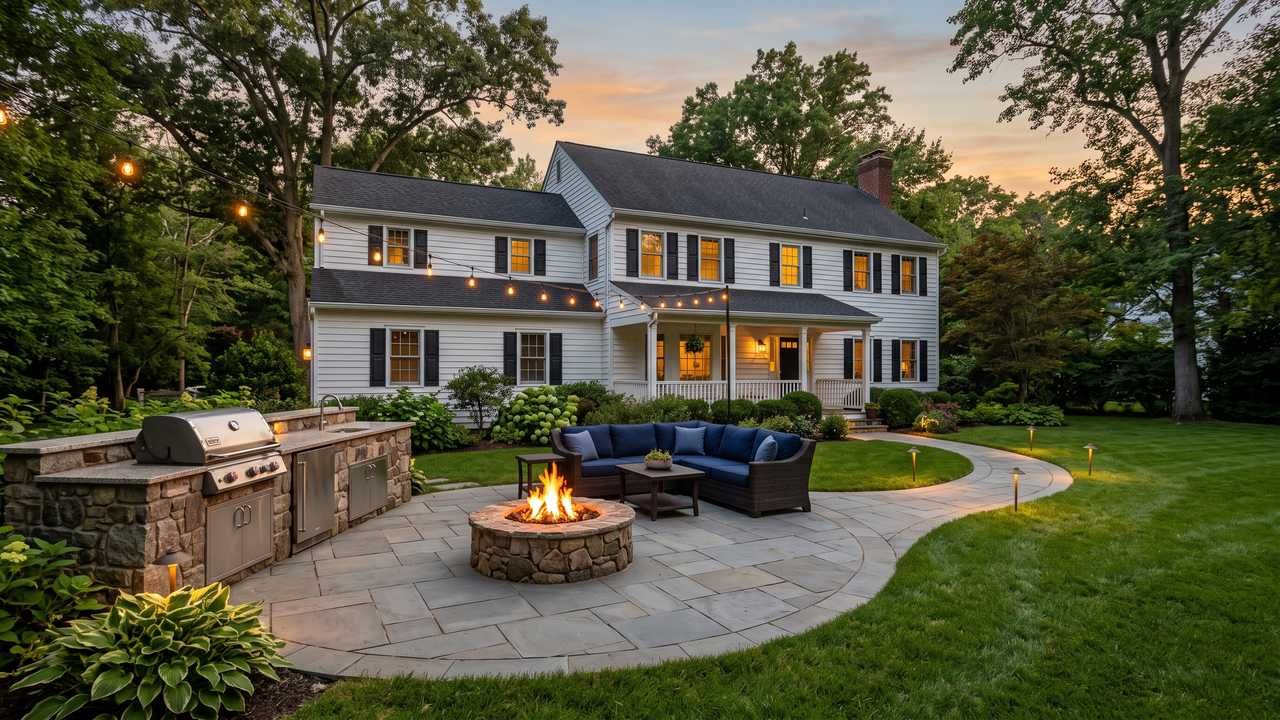
- Outcome: Zero settling; homeowner added a fire-pit ring in matching pavers
Case 2 – Stamped Concrete, Toms River (Installed 2020)
- Pattern: Ashlar slate, charcoal release agent
- Issue: Hairline cracks at control joints after Superstorm Ida’s heavy rains; color touched-up, but mismatch visible
- Outcome: Still functional, but the appraiser applied a $1,500 “future resurfacing” deduction during the 2024 refinance
ROI & Resale
- North Jersey Realtors report paver walkways recoup 72% of the cost; stamped concrete averages 58%.
- Central NJ buyers (Somerset, Middlesex) flagged well-maintained pavers as a “premium exterior feature” in 2024 MLS notes.
- South Jersey coastal listings saw no penalty for stamped concrete, provided the sealer was current and a slip-resistant additive was used.
(Data: NJ REALTORS® 2024 Remodeling Impact Report)
Decision Checklist
Choose pavers vs stamped concrete NJ based on the items that match your home:
Pick Pavers If…
- You value easy future repairs or utility trench access
- Your lot sits on expansive clay that lifts slabs
- You want a permeable drainage credit under the local stormwater code
- Budget allows an extra $3–$4 /sq ft for long-term durability
Pick Stamped Concrete If…
- You need the project poured and cured within 48 hours
- Budget is tight, but aesthetics still. The property is flat, well-drained, and the soils are stable sand
- You can commit to resealing every two years
FAQs: Pavers vs. Stamped Concrete for Custom Walkways
Do paver walkways need a permit in NJ?
Most counties treat walkways as exempt unless altering the grade by more than 6 inches or disturbing more than 5,000 sq ft. Always check your township.
How often should I reseal stamped concrete in New Jersey?
Acrylic or polyurea sealers should be reapplied every two years to combat UV fade and road-salt intrusion common in NJ winters.
Which option handles freeze-thaw cycles better?
Individual pavers flex and can be reset, making them more tolerant of the 30–60 annual freeze-thaw cycles New Jersey experiences.
Are permeable pavers eligible for NJ stormwater credits?
Yes. Under NJDEP Stormwater Rule N.J.A.C. 7:8, permeable pavers count as green infrastructure and may reduce or eliminate detention requirements.
What is the lifespan difference between pavers and stamped concrete?
Pavers typically last 30–40 years with maintenance, while stamped concrete averages 20–25 years before resurfacing or replacement is needed.
Final Thoughts
From Sussex County snowdrifts to salty Atlantic breezes, New Jersey’s microclimates test every outdoor surface. The right choice in the pavers vs stamped concrete NJ debate boils down to how much flexibility, drainage, and long-term value you demand. Lean on local expertise, respect state stormwater rules, and insist on vetted installers. Your walkway will then do exactly what it should—guide family and friends safely to your door for decades to come.
Call Jeff of All Trades
Jeff's offers design-build walkways in brick pavers and acid-stained, stamped concrete.
- Free on-site moisture & soil compaction test
- 3-D renderings within 48 hours
- 5-year comprehensive installation warranty
- Permeable ICPI-certified paver crews and ACI-finisher stamped crews on staff.