

Kitchen Remodeling Costs in Basking Ridge NJ: 2026 Budget Guide
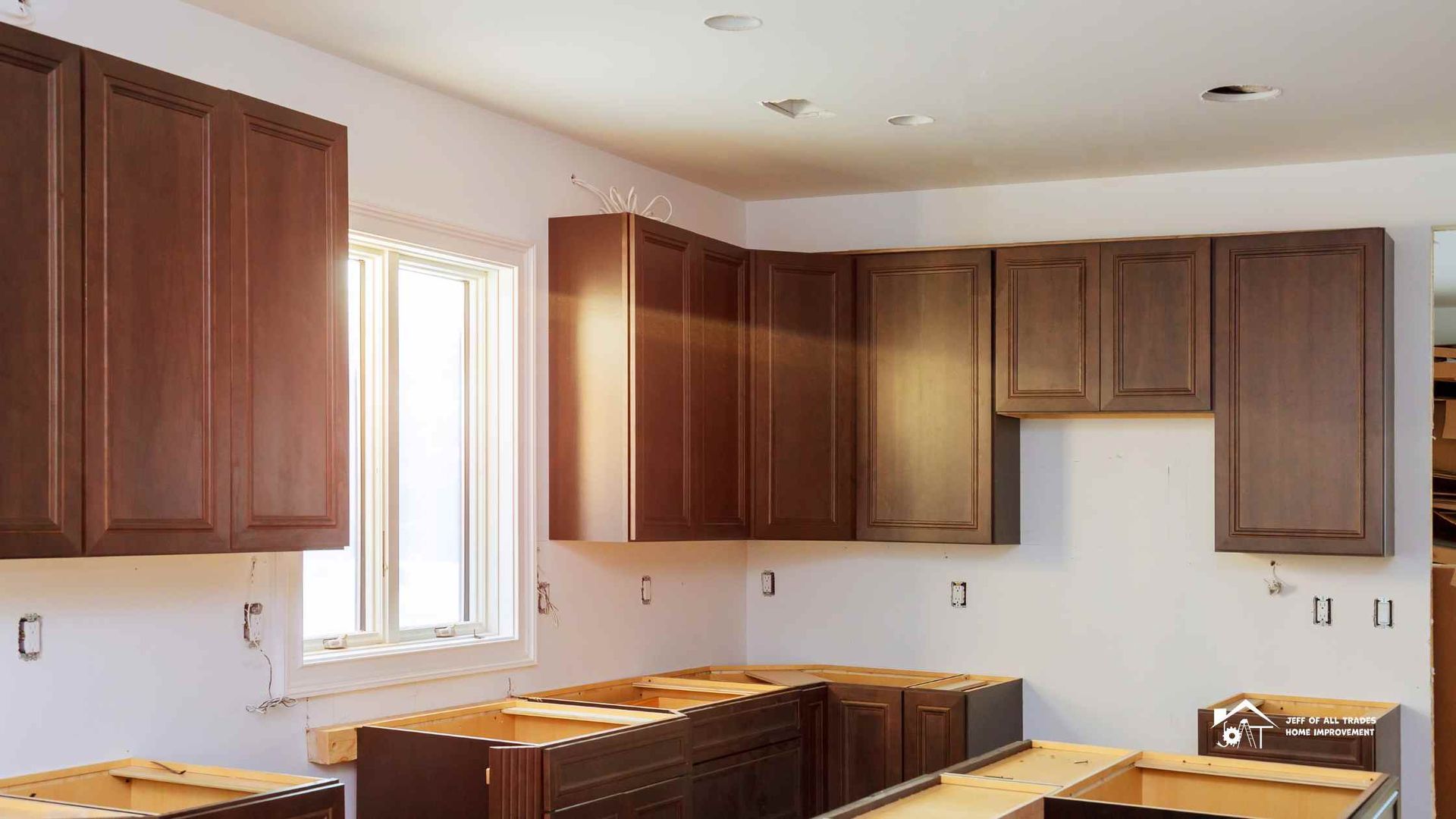
Right, let's talk about something that's on many homeowners' minds here in Basking Ridge – what does it actually cost to remodel a kitchen in 2026? And more importantly, what are you getting for your money?
I've been doing kitchen remodeling work across Somerset County for years now, and if there's one question I hear more than any other, it's this: "Jeff, what's this going to set me back?" It's a fair question, and one that deserves an honest, detailed answer.
The thing is, asking what a kitchen remodel costs is a bit like asking how long a piece of string is. I could give you a number right now, but it wouldn't mean much without context.
Your neighbor might spend £30,000 on their kitchen and get everything they wanted, while someone down the road spends £80,000 and still feels like they compromised.
It all depends on what you're starting with, what you want to achieve, and the choices you make along the way.
So instead of throwing some meaningless average at you, I'm going to break down exactly what goes into kitchen remodeling costs here in Basking Ridge and the surrounding areas.
By the end of this, you'll have a proper understanding of where your money goes and how to make informed decisions about your own project.
Understanding the Kitchen Remodeling Landscape in Basking Ridge
Before we get into specific numbers, it's worth understanding what makes Basking Ridge and the wider Somerset County area a bit different in terms of home improvement costs.
We've got a mix of property types here – everything from newer construction in developments to beautiful older homes with plenty of character. Some of you are working with galley kitchens that haven't been touched since the seventies, while others are looking to upgrade kitchens that are already decent but just don't quite work for your family anymore.
The cost of living here is higher than in many parts of the country, and that extends to home improvement work. Labor costs, material costs, permit fees – they're all going to be at the upper end compared to, say, rural areas or smaller towns. But you're also getting experienced tradespeople who understand local building codes, know how to work with the types of homes we have here, and can get the job done right.
In 2026, we're also seeing the lingering effects of supply chain adjustments and labor market changes from the past few years.
Some materials have stabilized in price; others are still more expensive than they were pre-pandemic. It's a different landscape than it was even two years ago.
The Three Tiers of Kitchen Remodels
When I sit down with clients to discuss their kitchen project, I generally think in terms of three tiers of remodeling work. These aren't rigid categories – plenty of projects fall somewhere in between –, but they're a useful framework for understanding what different budget levels get you.
Budget-Friendly Refresh (£15,000 - £30,000)
This is what I call a cosmetic refresh or minor remodel. You're not moving any walls, replumbing, or rewiring everything. Instead, you're making smart updates that give your kitchen a fresh look and improved functionality without breaking the bank.
What does this typically include? You're looking at new cabinet doors or refacing existing cabinets rather than replacing them entirely. New worktops in a mid-range material – maybe quartz or a good quality laminate.
Updated appliances, probably not the top-of-the-line models but solid, reliable pieces. A new sink and tap. Fresh painting, new hardware, maybe some new lighting fixtures, and possibly a simple tile backsplash.
You're working with the existing layout, which saves enormous amounts on plumbing and electrical work. The bones of the kitchen stay the same, but the look and feel can be completely transformed.
This level of remodel makes sense if your kitchen layout actually works well for you, or if budget is a real constraint. It's also sensible if you're planning to sell in the next few years and want to update without over-improving for your neighborhood.
Mid-Range Transformation (£30,000 - £60,000)
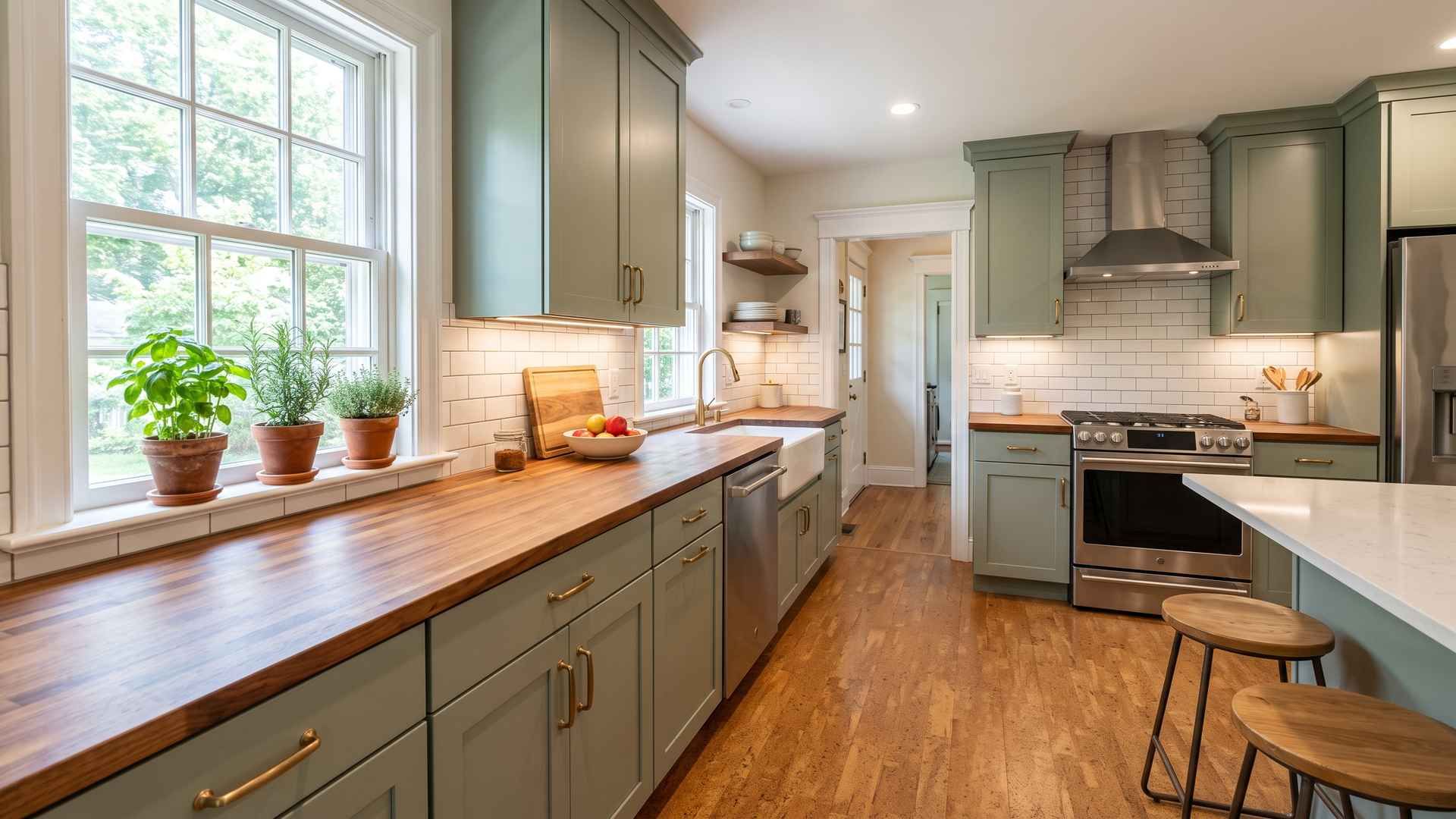
This is where most of my Basking Ridge clients end up, and it's what I'd call a proper remodel. You're getting new cabinets, not just refacing. Quality worktops – decent quartz or granite.
Good appliances, maybe not the absolute top tier but getting there. Proper tile work for the backsplash and, if needed, the flooring.
At this level, you might be making some layout changes. Perhaps you're opening up a wall to the dining room or creating a breakfast bar. You could be relocating some appliances to make better use of the space.
There's probably some electrical work involved – adding outlets, upgrading lighting, and maybe installing some under-cabinet fixtures.
Your floor tiling is likely getting replaced. You're choosing materials that will last and look good for many years. The finish quality is noticeably higher than the budget option.
This tier gives you a kitchen that genuinely feels new and is tailored to how you actually use the space. It's not just updating what was there – it's creating something better.
Premium Complete Renovation (£60,000 - £100,000+)
Now we're talking about a full-scale renovation where pretty much everything is on the table. Custom cabinetry built specifically for your space. High-end appliances – the sort with more features than you'll probably ever use but that work beautifully. Premium worktops in materials like thick quartz or marble. Extensive tile work with designer choices.
Projects at this level often involve significant structural work. Maybe you're knocking through to create an open-plan kitchen-diner-living space. You might be adding or relocating windows. There could be plumbing relocated, new gas lines run, extensive electrical work including dedicated circuits for high-end appliances.
The finish quality is exceptional. Every detail is considered, from the style of cabinet hinges to the exact shade of grout in your backsplash. You're working with an interior designer or at least spending considerable time on design decisions.
This level makes sense if you're in your forever home, updating a high-value property where the investment makes financial sense, or simply want the very best and have the budget for it.
Breaking Down the Costs: Where Does Your Money Actually Go?
Right, let's get into the specifics. I'm going to break down the major cost categories so you can see where your money actually goes in a kitchen remodel.
Cabinetry (30-40% of budget)
Cabinets are usually your single biggest expense, and there's a reason for that – they're the defining feature of your kitchen. They provide all your storage, set the style, and take up most of the visual space.
Stock cabinets from big-box stores might run you £100- £ 200 per linear foot. These are pre-made in standard sizes. You're limited in finish options and sizes, but for a straightforward kitchen layout, they can work well.
Semi-custom cabinets – which is what most of my clients choose – run more like £150- £ 350 per linear foot. You get many more options for finishes, door styles, and internal fittings. Sizes are more flexible, so they can better accommodate your specific space.
Custom cabinets start around £500 per linear foot and can go considerably higher. These are built specifically for your kitchen by a cabinet maker. Every dimension is exact, you can have any finish you want, and the quality is typically outstanding.
For an average Basking Ridge kitchen of around 10 by 12 feet, you're looking at roughly 20-25 linear feet of cabinetry. Do the maths on those per-foot cost,s and you can see why cabinets eat up such a large chunk of the budget.
Don't forget to factor in cabinet hardware – handles, knobs, hinges. Quality hardware can add £300- £ 800 to your project, but it makes a real difference to both function and appearance.
Worktops (10-15% of budget)
Your worktop choice has a huge impact on both appearance and budget. Let's run through the main options.
Laminate is your budget option at £15- £ 40 per square foot, installed. Modern laminates look much better than they used to, and they're perfectly functional. They won't last as long as stone options, and you need to be more careful with them, but for a budget remodel, they work.
Quartz is probably the most popular choice for my Somerset County projects, running £50-120 per square foot. It's durable, doesn't need sealing, comes in endless colors and patterns, and looks great. It's not entirely heat-proof and can be damaged by very high temperatures, but for normal kitchen use, it's brilliant.
Granite runs £40- £ 100 per square foot, depending on the stone's type and rarity. It needs periodic sealing but is very durable and each slab is unique. Some people love the natural variation, others prefer the more uniform look of quartz.
For a typical kitchen, you're looking at 35-50 square feet of worktop surface. That puts the cost anywhere from £600 for basic laminate up to £6,000 or more for premium materials.
Appliances (15-20% of budget)
Appliances are where you can really control your costs based on what matters to you. Some clients want the best possible cooking equipment and are happy with a basic fridge. Others prioritize the fridge and are less fussed about the cooker.
For a complete appliance package – fridge, cooker/hob, hood, dishwasher, and possibly a microwave – you're looking at:
Budget package: £2,000-4,000. Basic models from major brands that will do the job perfectly well.
Mid-range package: £4,000-8,000. Better features, more efficient, nicer finishes, longer warranties.
Premium package: £8,000-15,000+. High-end brands, professional-grade cooking equipment, smart features, premium finishes.
Don't forget about the installation costs, especially if you're switching from electric to gas or vice versa, or if appliances need dedicated circuits. That can add another £500- £ 1,500, depending on complexity.
Labor Costs (20-35% of budget)
Labor is often where homeowners get the biggest surprises, but skilled tradespeople are worth every penny. Botched work costs far more to fix than it would have cost to do properly in the first place.
In Somerset County, you're looking at roughly these rates:
General contractor/project management: 10-20% of total project cost. This is someone who coordinates all the trades, manages the schedule, and deals with any issues that come up. For larger projects, having a proper project manager is worth it.
Carpenter/cabinet installer: £50- £ 80 per hour. Installing cabinets properly is skilled work. Rushing this or doing it poorly ruins even expensive cabinets.
Electrician: £70-100 per hour. A licensed professional must perform all electrical work. No exceptions.
Plumber: £80- £ 120 per hour. Like electrical work, plumbing needs to be done right. Leaks can cause thousands in damage.
Tiler: £10-20 per square foot depending on the complexity of the pattern and size of tiles. Simple subway tile is at the lower end, intricate patterns with small tiles at the higher end.
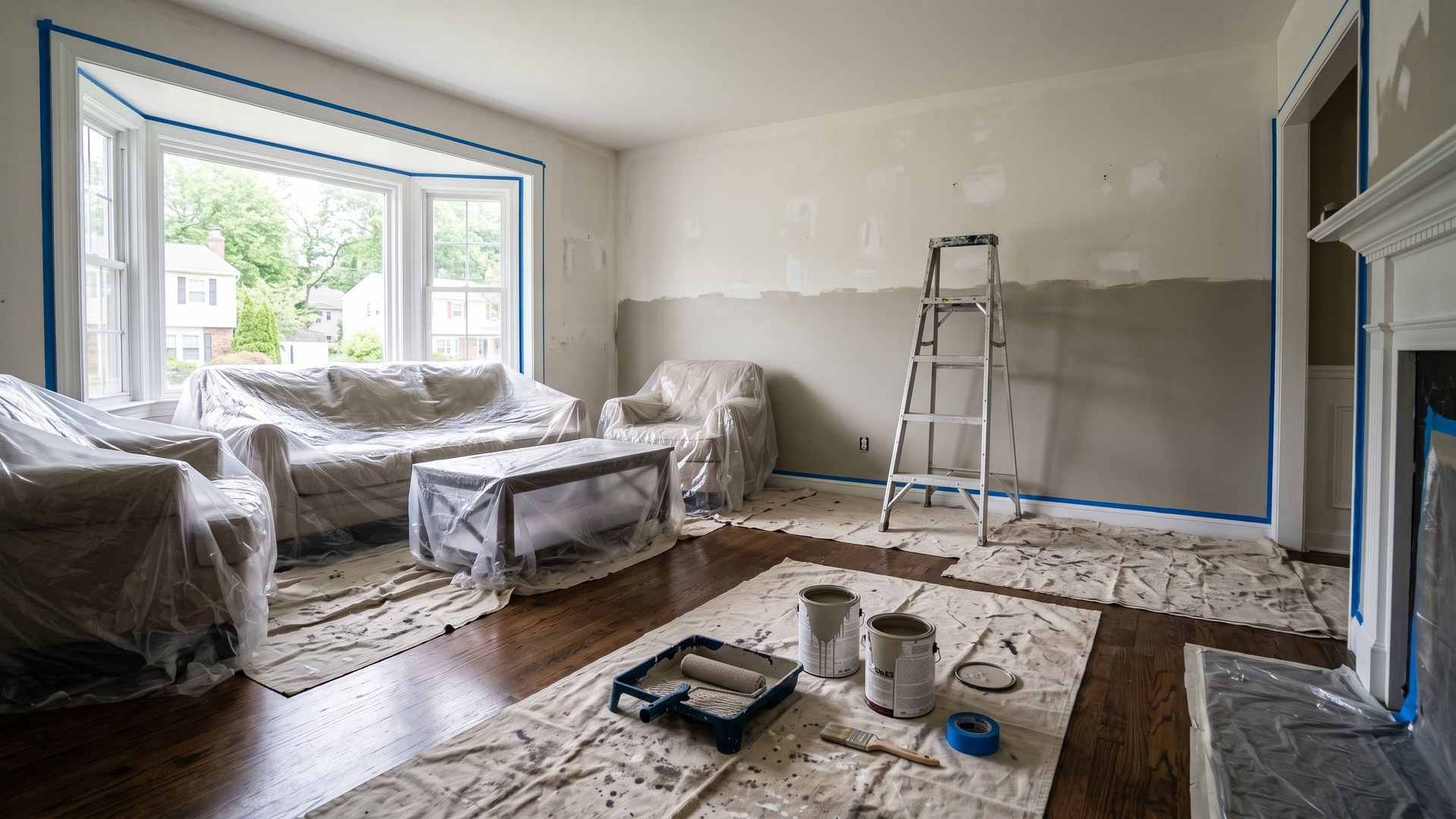
Decorator/painter: £35- £ 60 per hour. Quality paint work makes everything look better.
For a mid-range kitchen remodel taking 3-4 weeks, labor costs typically run £10,000-20,000. For more extensive renovations involving structural work, that can climb to £25,000-40,000 or more.
Flooring (5-10% of budget)
If your kitchen floor needs replacing, you've got several options. Many of my Basking Ridge clients go for floor tiling – it's durable, looks great, and holds up well to the demands of a kitchen.
Vinyl or linoleum: £3-8 per square foot installed. Durable, water-resistant, comfortable underfoot. Modern luxury vinyl can look remarkably like wood or tile.
Ceramic or porcelain tile: £8-20 per square foot installed. Very durable, water-resistant, huge range of styles. Can be cold and hard underfoot but excellent in terms of longevity.
Natural stone: £15- £ 35 per square foot installed. Beautiful but needs sealing and maintenance. Can be slippery when wet.
Hardwood or engineered wood: £10-25 per square foot installed. Looks wonderful but can be damaged by water. Many building codes don't allow solid hardwood in kitchens.
Other Costs to Consider
Beyond the major categories, numerous smaller expenses add up:
Lighting: £500- £ 3,000, depending on how fancy you want to go. Under-cabinet lighting, pendant lights over islands, recessed ceiling lights – it all adds up but makes a huge difference.
Backsplash: £800- £ 3,000, depending on tile choice and the amount of wall space. Simple subway tile is at the lower end, designer tiles or extensive coverage at the higher end.
Sink and tap: £300- £ 1,500. You'd be amazed at the range. A basic stainless sink and standard tap might be £300, while a large farmhouse sink with a designer tap can easily hit £1,500.
Paint: £300- £ 800 for a professional job. DIY can save money here if you're capable.
Permits and inspections: £300- £ 1,000, depending on the scope of work. Any electrical or plumbing work requires a permit in New Jersey.
Disposal and cleanup: £300- £ 1,000. Old cabinets, worktops, appliances, and construction debris need to go somewhere.
Hidden Costs and Surprises
In all my years doing home improvement work, I've learned that surprises happen on almost every project. It's not anyone's fault – you simply can't know what's behind walls or under floors until you open things up.
Here are the common surprises that can add to your budget:
Water damage: Old leaks from the sink or dishwasher can rot out the floor or cabinet bases. If we find this, it needs to be addressed before the new kitchen goes in. This can add £500- £ 3,000, depending on the extent.
Electrical updates: Older homes often need their electrical service upgraded to handle the loads of modern appliances. Adding circuits or upgrading the panel can cost £1,000- £ 5,000.
Plumbing issues: Old pipes might need replacing, or drain lines might need rerouting. This can add £500- £ 3,000.
Structural issues: Sometimes a wall you want to remove is load-bearing and requires a proper beam to be installed. Or floor joists need reinforcement. Structural work can get expensive quickly, potentially adding £2,000- £ 10,000.
HVAC adjustments: Moving walls might mean moving heating or cooling vents and ductwork. This can add £500- £ 2,000.
Code compliance: Bringing an older kitchen up to current building code can require unexpected work. GFCI outlets, proper ventilation, and adequate lighting – these can add £500- £ 2,000.
I always recommend setting aside a 10-20% contingency in your budget for these surprises. Better to have the money set aside and not need it than to get caught short halfway through the project.
Ways to Control Costs Without Sacrificing Quality
You want a lovely kitchen, but you don't want to remortgage the house. Here are strategies that actually work:
Keep the layout: Moving plumbing and gas lines is expensive. If your current layout is reasonably functional, work with it. You can still transform the space without relocating everything.
Choose your splurges: Decide what matters most to you and spend there, then economize elsewhere. Love cooking? Invest in a great cooker and hood. Don't care much about appliances? Go mid-range there and spend more on beautiful cabinets.
Mix and match materials: You don't need marble everywhere. Maybe you use it just for the island or a feature area, and use quartz elsewhere. Same with cabinets – you could do painted cabinets on most walls and save wood cabinets for a feature island.
Refacing instead of replacing: If your cabinet boxes are in good shape, refacing them (with new doors, drawer fronts, and veneer on the boxes) costs about half as much as full replacement.
DIY what you can: I'm not suggesting you do your own electrical or plumbing work – leave that to the professionals. But demolition, painting, and some of the simpler finishing touches are things many homeowners can tackle themselves.
Shop around for materials: You don't have to buy everything from one place. Sometimes the tile shop has the best tile prices, but the kitchen showroom has better appliance deals. It takes more time but can save money.
Consider good-quality stock cabinets: You might be pleasantly surprised by what's available in stock sizes. If your kitchen layout works with standard dimensions, you can save thousands.
Phase the project if needed: Maybe you do the main work now and add that fancy integrated coffee machine next year. Or you live with your current appliances if they work and replace them as needed rather than all at once.
Return on Investment Considerations
Let me be straight with you – kitchen remodeling rarely pays for itself entirely when you sell. But it does add value, and more importantly, it adds enormous value to your daily life if you're staying in the home.
In Basking Ridge and the surrounding Somerset County area, you can typically expect to recoup 50-70% of your kitchen remodeling costs when you sell, depending on how much you spent and how the kitchen compares to others in your neighborhood.
A mid-range remodel (£30,000- £ 50,000) in a £500,000- £ 700,000 home usually makes good financial sense. You're bringing the kitchen up to what buyers expect at that price point.
However, putting a £100,000 kitchen in a £400,000 house is over-improving. You'll never get that money back. Similarly, a £15,000 refresh in a £900,000 property might look cheap and could actually hurt your value.
The best kitchen remodels for resale value are those that are high-quality but not overly personal. Neutral colors, classic styles, and good quality materials appeal to the broadest range of buyers.
But here's the thing – if you're planning to stay in your home for many years, the return on investment isn't really about resale value. It's about enjoying a beautiful, functional space every single day. That morning coffee in a kitchen you love, preparing family meals in a space that works perfectly, having friends over and not being embarrassed by an outdated kitchen – these things have value that doesn't show up in a real estate appraisal.
Timeline Expectations
Budget isn't just about money – it's also about time. Kitchen remodels are disruptive, and understanding the timeline helps you plan.
A mid-range remodel typically takes 4-8 weeks. There's more demo work, time for any damage repair or structural issues to be addressed, cabinet installation, worktop templating and installation (with a wait time between these), appliance installation, tile work, painting, and final touches.
An extensive renovation involving structural changes can take 8-16 weeks or more. You're adding walls, bringing down walls, potentially adding new windows or doors, doing extensive electrical and plumbing work, and finishing everything.
These timelines assume no major supply delays or unexpected issues. Lead times for custom cabinets or special-order materials can add weeks or months.
Plan for being without a full kitchen during this time. Some people set up a temporary kitchen in another room with a microwave, kettle, and toaster oven. Others use it as an excuse to explore all the local restaurants. Having a plan makes the disruption much more manageable.
Questions to Ask Potential Contractors
When you're getting quotes for your kitchen remodel, don't just compare bottom-line numbers. The cheapest quote is rarely the best value. Here's what you should be asking:
Are you licensed and insured? In New Jersey, contractors need proper licensing. Don't work with someone who isn't properly licensed and insured. It's not worth the risk.
Can you provide references from recent kitchen projects? Any reputable contractor should be happy to provide references. Actually call them and ask about their experience.
What's included in your quote? Make sure you're comparing like with like. Does it include all labor and materials? What about permits, disposal, and cleanup?
What's your timeline? When could you start, and how long will it take?
How do you handle changes during the project? Things come up. Understanding the process for change orders helps avoid disputes.
Who will be doing the work? Will it be the person you're talking to, or subcontractors? There's nothing wrong with subcontractors, but you want to know who's actually in your home.
At Jeff's Home Improvement, we believe in transparent pricing and clear communication. We've built our reputation across Basking Ridge, Bedminster, Bernardsville, and the wider Somerset County area by treating every project as if it were our own home.
Current Market Trends in 2026
The kitchen remodeling market in 2026 looks different than it did a few years ago. Here's what we're seeing:
Material costs have generally stabilized after the volatility of 2021-2023, though they remain higher than pre-pandemic levels. Some specialized items still have longer lead times than we'd like.
Labor remains in high demand. Good tradespeople are busy, which means you need to book further in advance than you might have a decade ago.
There's increasing focus on energy efficiency. Energy-efficient appliances aren't just a nice-to-have anymore – they're what people expect. This adds a bit to upfront costs but saves money over time.
Smart home integration is becoming more common but isn't yet universal. Some clients want their kitchen fully connected, others couldn't care less. It's very much a personal preference thing.
Open-plan layouts remain popular, though not quite as universal as they were a few years ago. Some people are finding they actually want their kitchen somewhat separate from living areas.
Two-tone cabinets – say, different colors for uppers and lowers, or a contrasting island – are very popular right now. This adds a bit to costs but creates lovely visual interest.
Large islands with seating are in almost every kitchen we do now. People want that gathering space.
FAQs: Kitchen Remodeling
How long does a typical kitchen remodel take in Basking Ridge, and can I still use my kitchen during the work?
A typical mid-range kitchen remodel takes between four and eight weeks from start to finish, though this can vary depending on the project's complexity.
During much of this time, your kitchen will be completely unusable – we're talking no running water, no cooker, possibly no access at all during certain phases of the work. The demolition phase usually takes a few days. There's structural work if needed, followed by rough plumbing and electrical, cabinet installation, worktop templating (which can have a week or two wait before installation), appliance installation, tile work, and finally painting and finishing touches.
Most families set up a temporary kitchen elsewhere in the home with a kettle, microwave, and perhaps a camping stove or slow cooker. Some use it as an opportunity to eat out more or rely on takeaway. If you work from home, be prepared for noise and disruption during working hours.
We always try to minimize the inconvenience, but there's no getting around the fact that a proper kitchen remodel is disruptive. The good news is that it's temporary, and when it's done, you'll have a kitchen you love that makes up for those few weeks of inconvenience.
Is it worth spending money on high-end appliances, or should I stick with mid-range options?
This really depends on how you use your kitchen and what matters to you personally. If you're passionate about cooking, spend a lot of time preparing meals, and genuinely appreciate the features and performance of high-end appliances. They can absolutely be worth the investment.
Professional-grade cookers offer better temperature control, higher BTU burners, and superior build quality. Top-tier fridges maintain more consistent temperatures and often last longer. However, if you're fairly casual about cooking and mainly use your kitchen for basic meal preparation, mid-range appliances will serve you perfectly well.
Modern mid-range appliances are remarkably good – they're reliable, efficient, and offer most features the average household needs.
Can I remodel my kitchen in phases to spread out the cost, or does everything need to be done at once?
Phasing a kitchen remodel is definitely possible and can make sense financially, though it's not always the most efficient approach. The key is planning the phases thoughtfully so you're not creating more work or cost in the long run.
A sensible phased approach might be: Phase one handles all the structural, plumbing, and electrical work, installs new cabinets and worktops, and gets you a functional kitchen. Phase two adds the fancy features – perhaps upgrading appliances, installing a designer backsplash, or adding special lighting.
What doesn't work well is doing half the cabinets now and the other half later, or installing worktops and then wanting to change the cabinet configuration next year. Some things are genuinely more efficient to do all at once. If you're opening up walls and having electricians in anyway, it's more cost-effective to do all the electrical work then rather than calling them back six months later. Similarly, tilers prefer to do all the tiling in one go rather than coming back to match in new sections.
Making Your Decision
Right, we've covered a lot of ground here. Your head might be spinning a bit with all these numbers and options. Let me try to bring it all together.
Kitchen remodeling in Basking Ridge in 2026 is a significant investment. Whether you're spending £20,000 or £80,000, it's real money that deserves careful thought.
Start by really thinking about how you use your kitchen. What frustrates you about your current space? What would make your daily life better? A kitchen that looks beautiful but doesn't function well for your family is a waste of money.
Be realistic about your budget. It's better to wait another year and do the project properly than to cut corners and be disappointed with the result. Or to stretch yourself too thin financially and create stress.
Choose your contractor carefully. The quality of the work matters more than saving a few thousand pounds. Handyman services might be fine for small jobs, but a full kitchen remodel needs experienced professionals.
Plan for the disruption. Having a realistic timeline and a plan for managing without your kitchen makes the process much less stressful.
Don't forget the details. The finish quality on things like tile work, painting, and trim work makes the difference between a kitchen that looks good and one that looks truly professional.
Finally, remember that this is your home. At the end of the day, you're the one who has to live with the choices you make. Don't let trends or what your neighbors did dictate every decision. Create a kitchen that works for you and your family.