Cost to Paint Kitchen Cabinets: Is It Really the Cheap Option?
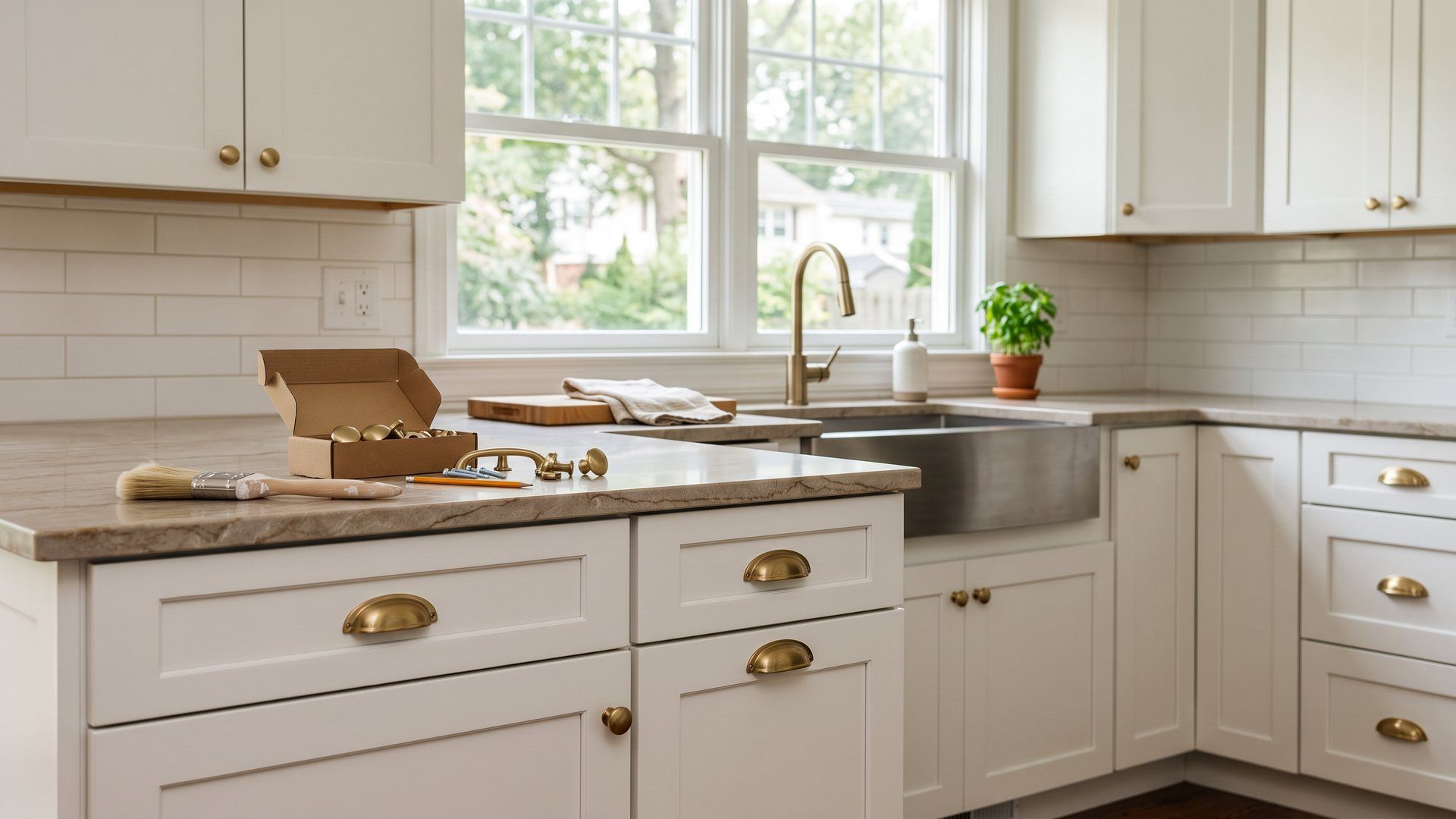
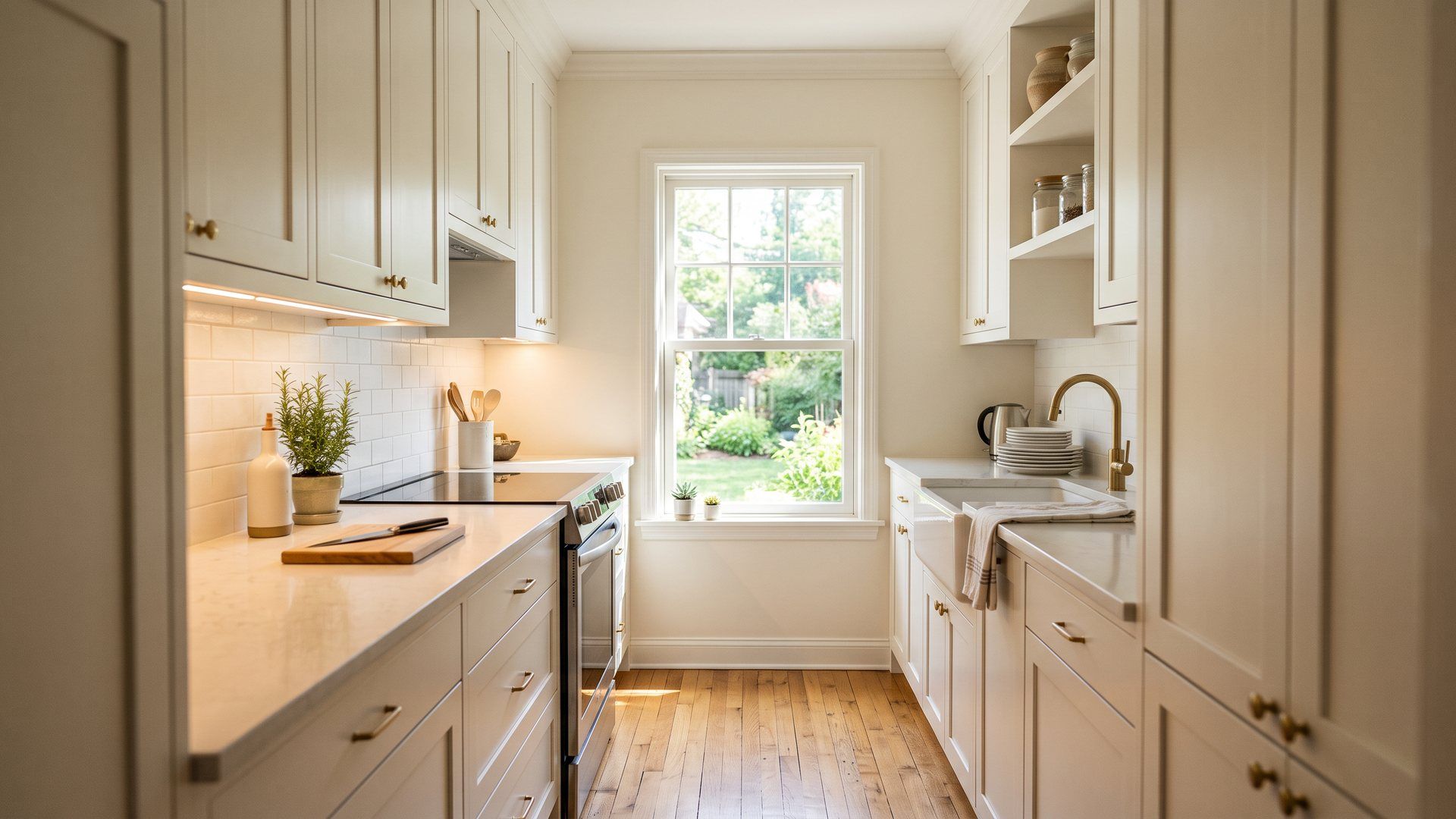
Painting your kitchen cabinets is the single biggest visual change you can make to a kitchen without replacing anything.
It is also the project I most often see done badly, and the one where the gap between a proper job and a weekend attempt is most brutally obvious. Cabinets are not walls. They get touched constantly, they get wet, they get greasy, and they have doors that close against each other. Paint that is not applied correctly on a cabinet does not just look imperfect. It chips at the edges, it stays slightly tacky, and it sticks to itself when you close a door.
I want to lay out honestly what this job involves, because "just painting the cabinets" is one of the most misleading phrases in home improvement. There is a reason a proper cabinet painting quote sometimes surprises people, and there is also a reason it is still usually a fraction of what new cabinets cost.
We have written separately about refacing versus replacement. This one is specifically about paint.
First: Can Your Cabinets Even Be Painted?
Before cost, this. Not every cabinet is a candidate, and finding out too late is expensive.
Good Candidates
Solid wood doors and frames. Oak, maple, cherry, poplar, birch. These take paint beautifully as long as they are prepped properly. If your cabinets are solid wood and structurally sound, painting is almost always worth considering.
Wood veneer over plywood, provided the veneer is intact and not lifting or bubbling anywhere. Veneer can be painted successfully. Damaged veneer cannot, and it will not be rescued by paint.
Previously painted cabinets in decent condition, assuming the existing finish is sound and you are prepared for proper sanding.
MDF doors, which actually take paint very well because they have no grain and give a very smooth result. Their weakness is water, so any swollen edges near the sink or dishwasher are a problem.
Poor Candidates
Thermofoil. This is a vinyl film heat-wrapped over MDF, common in kitchens from the nineties and two-thousands. Paint does not adhere to it reliably, and the film itself tends to peel away from the substrate near heat sources, particularly beside the oven. It can be done with specific bonding primers, but I would rather be straight with you: results are inconsistent and I generally advise against it.
Laminate. Similar story. Possible with the right primer, but adhesion is always the weak point and edges are vulnerable.
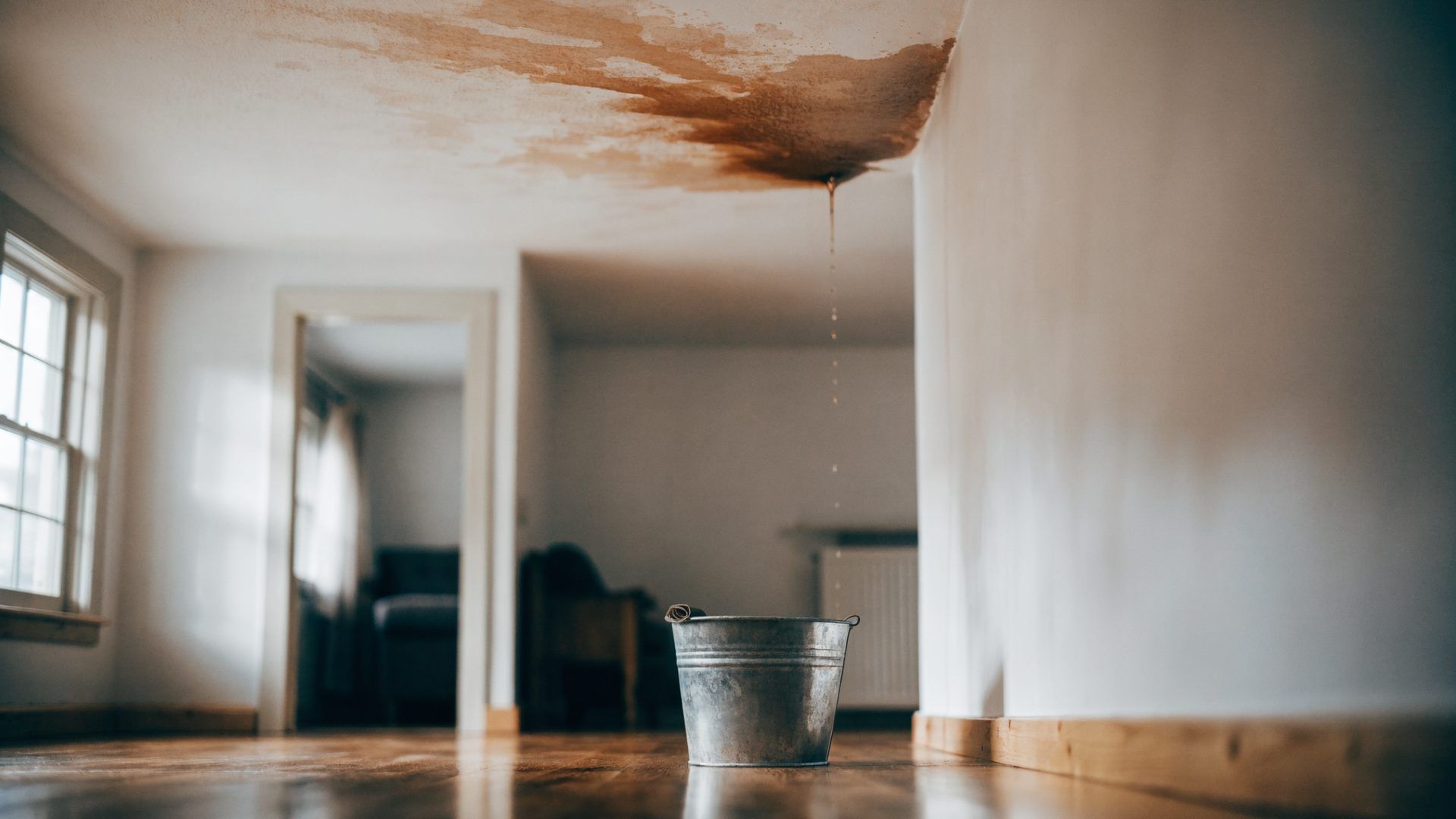
Anything water-damaged or swollen. Very common on the base cabinet next to the dishwasher and under the sink. Paint will not fix a swollen door. That door needs replacing.
Cabinets that are structurally failing. If boxes are sagging, hinges have pulled out of soft particle board, or drawers no longer run, painting is money spent on the wrong problem. Sound boxes are the whole basis of the case for painting.
The honest test is this: open a door, look at the box, and shake it slightly. If the carcass is solid and the doors are wood, you have a good candidate. If the box flexes and the doors are plastic-looking, you are probably better off putting the money toward replacement.
Why It Costs What It Costs
Here is where expectations and reality separate. The painting is a small part of the timeline.
The Job Is Mostly Preparation
A proper cabinet job goes roughly like this.
Every door and drawer front comes off. Every hinge, handle and knob comes off. Everything gets labeled, because a kitchen with thirty doors will absolutely not go back together correctly from memory, and doors that were hung on specific hinges want to go back to the same openings.
Then everything gets degreased, and I mean properly degreased. Kitchen cabinets carry years of airborne cooking oil, and it is on surfaces that look perfectly clean. This is the number one reason DIY cabinet paint fails. Paint will not bond through grease, and the failure shows up weeks later as peeling around the handles and above the range.
Then sanding. Every surface, to break the existing finish and give the primer something to key into. Not sanding back to bare wood, but scuffing thoroughly and evenly, including profiles and corners on raised-panel doors, which is fiddly, slow, hand work.
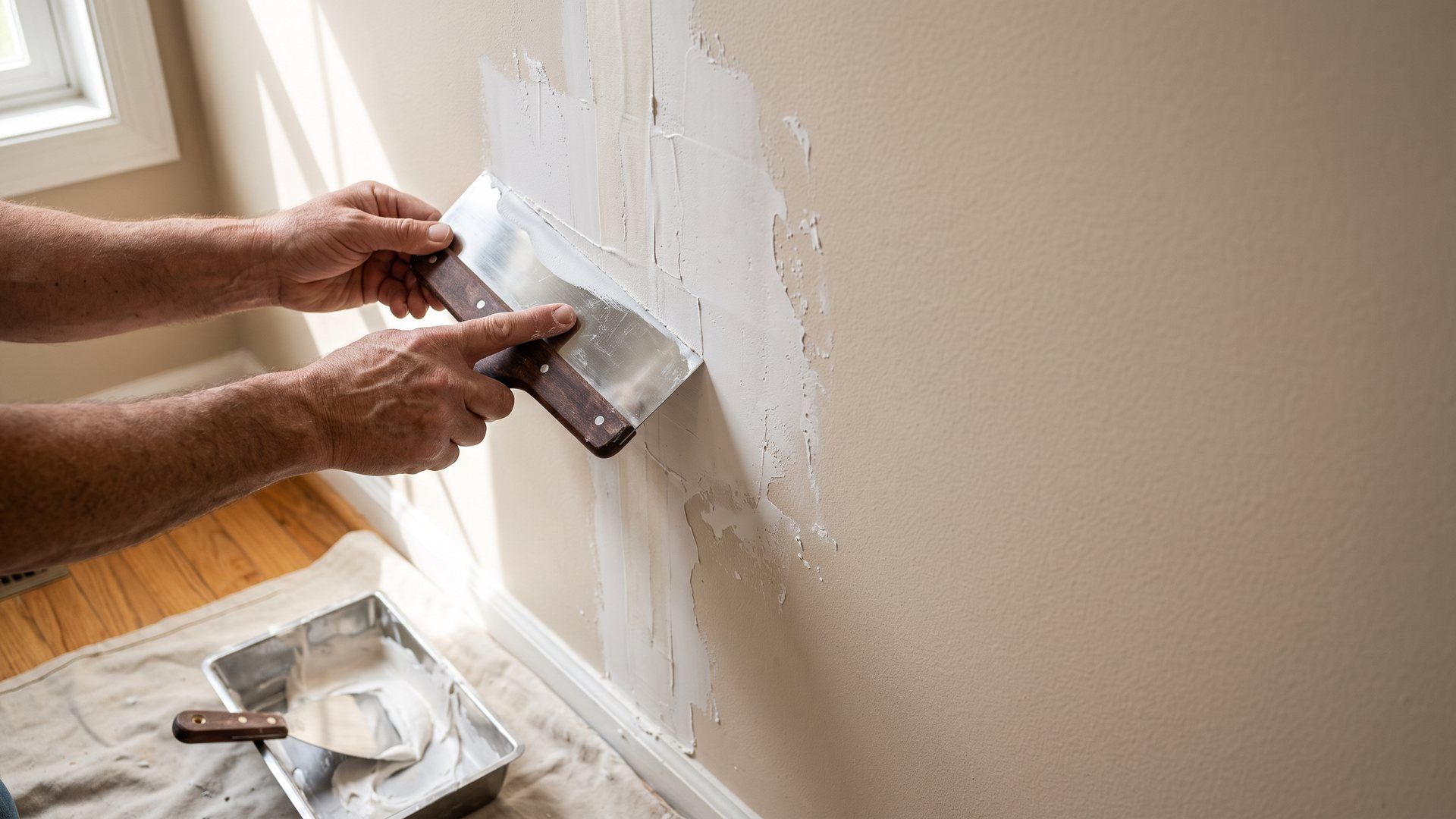
Then filling any dings, then cleaning off all the sanding dust, because dust in a cabinet finish is very visible.
Then primer. A proper bonding primer, and for oak, a grain filler or high-build primer if you want a smooth finish rather than a painted-oak look, which is a decision worth making consciously.
Only then does color go on, in multiple thin coats, with cure time between them.
By hours, prep is typically the majority of the job. That is the answer to why painting cabinets is not cheap.
Spray Versus Brush
This is the biggest quality and cost variable.
Spraying gives a smooth, factory-like finish with no brush marks. It is what makes painted cabinets look like painted cabinets rather than like somebody painted your cabinets. It requires either an off-site spray setup or serious containment in your home, because overspray travels remarkably far.
Brush and roll can produce a very good result on flat slab doors in skilled hands, and it is cheaper and less disruptive. On detailed raised-panel doors it is much harder to keep even.
Many good contractors spray the doors and drawer fronts off-site or in a garage setup, then brush the face frames in place, because the frames are the part you touch least and see least directly. That is a sensible middle path and it is what I usually recommend.
The Product Matters More Than Almost Anywhere Else
Wall paint on cabinets is a mistake, full stop. Cabinets need a coating formulated to cure hard, because it has to resist knocks, fingernails, cleaning products and doors closing against each other.
The relevant property is cure time versus dry time. A cabinet coating may be dry to the touch in an hour and take two to three weeks to fully cure to its final hardness. During that window the finish is soft and vulnerable. This is why a good contractor will tell you to be gentle with your kitchen for the first couple of weeks, and why doors that get closed hard too early can end up with imprint marks.
If a quote does not specify what coating is being used, ask.
Interiors, and Whether You Need Them
Painting cabinet interiors adds a significant amount of work for something you see only when a door is open. Most jobs skip it, and I think that is usually right. If your interiors are clean and unstained, leave them. If you have glass-front doors, obviously those interiors get painted.
Just make sure you and your contractor agree on this before work starts, because it is a classic assumption gap.
What Moves the Price
Roughly in order:
Door count. Not kitchen size, door and drawer count. That is the unit of work. A compact kitchen with lots of small doors and drawers can be more work than a larger kitchen with fewer, bigger ones. Count yours before you call anybody, it makes conversations much more accurate.
Door style. Flat slab doors are quickest. Shaker adds edges and inside corners. Raised panel with detailed profiles is the slowest to sand and the slowest to coat evenly.
Wood species. Oak is the notable one. Oak has deep open grain, and if you paint it without filling, that grain telegraphs through and you get a textured look. Some people like it. If you want a smooth modern finish on oak, that is extra material and extra labor, and it is worth being clear which you are expecting.
Color change severity. Dark stained cabinets going to white need more coats and better priming to prevent tannin bleed, which is when natural compounds in the wood push through and cause yellowish staining. That requires a stain-blocking primer.
Spray versus brush, as above.
Whether interiors are included.
Hardware. New handles and hinges are a small material cost with a large visual effect, and while everything is off, it is the cheapest time to change them. If you are moving from knobs to pulls, or changing hole spacing, that means filling and drilling, which is more work.
How Long, and How Disruptive
A professional cabinet job is typically several days to a week or more, depending on door count and whether spraying happens off-site.
The disruption is real and people underestimate it. Your doors are off for the duration. If the doors go off-site for spraying, your kitchen is usable but open-fronted. If everything is sprayed in place, the kitchen is out of action and sealed off.
Then, after the crew leaves, there is the cure period. The kitchen is usable but the finish is still hardening, so no scrubbing, no slamming, and ideally felt pads on door edges.
Plan around it. This is not a job to start the week before you host something.
Painting Versus the Alternatives
Painting is the least expensive of the three ways to change how a kitchen looks, and it is the only one that lets you keep everything you have.
Refacing replaces doors, drawer fronts and the visible face frame veneer while keeping the boxes. It costs considerably more than painting but gives you a genuine change of door style, which paint cannot do. If you dislike the shape of your doors rather than their color, paint will not solve your problem.
Replacement gives you new layout, new storage and new boxes. It is a different order of investment.
The decision tree I use with homeowners is simple. Are the boxes sound and do you like the layout? If no, replace. If yes, do you like the door style? If no, reface. If yes, paint. Most kitchens with solid wood doors and a workable layout land on paint, and are transformed by it.
Where You Can Genuinely Save
There are real savings available on this job, and some false ones. Worth knowing which is which.
Real Savings
Do the removal and reinstallation yourself. Taking off thirty doors, labeling them, removing hinges and handles, and putting it all back at the end is several hours of work requiring no skill beyond patience and a system. Number the inside of each door with masking tape and photograph everything before you start. Plenty of contractors will happily price the job with that excluded.
Do the degreasing yourself, if you are thorough. It is unskilled but it is the step everything depends on, so if you take it on, do it properly and do it twice.
Keep your existing hardware if it is in good condition and you like it. The saving is modest since it still comes off and goes back on, but new hardware for a whole kitchen adds up.
Skip the interiors. Most people should.
Bundle it with other painting. If you are having rooms done anyway, adding cabinets to the same visit spreads setup and mobilization across more work.
False Savings
Doing the sanding yourself to a lower standard. This is the one I would push back on hardest. A contractor arriving to find inconsistently scuffed doors either re-sands them, which you are now paying for anyway, or paints over the problem, which becomes your problem in a year.
Using leftover wall paint. It will not cure hard enough. It will stay slightly soft, mark easily, and doors will stick to frames.
Skipping primer because the paint claims to include it.
Painting cabinets you know need replacing. Money spent to delay a decision you have already made.
One Thing Worth Adding While Everything Is Off
If you have been thinking about soft-close hinges or drawer slides, this is the moment. Everything is already removed and the doors are already off their hinges, so the labor is largely absorbed. Doing it as a separate job later means repeating all that removal work.
Common Questions About Painting Kitchen Cabinets
How long will painted cabinets actually last?
Done properly, with correct degreasing, sanding, bonding primer and a genuine cabinet coating, you should expect eight to ten years or more before it needs attention, and what needs attention first is usually specific high-contact areas rather than the whole kitchen.
The areas that go first are predictable: around handles, the door beside the trash pull-out, the cabinet next to the range, and the drawer fronts you open most. Those can be touched up.
Done badly, and by that I mean wall paint over ungreased, unsanded cabinets, it can start failing within a year. The difference is almost entirely preparation, not the paint.
Can I paint over cabinets that were already painted once?
Usually yes, and it is often easier than painting stained wood because there is no tannin bleed risk and no grain to fill.
The critical question is whether the existing paint is sound. Press a piece of tape firmly onto an inconspicuous area and pull it off sharply. If paint comes away, the existing finish has an adhesion problem, and anything you put on top inherits it. In that case the old coating needs removing rather than recoating.
Also worth establishing what the existing finish is. Old oil-based paint needs a bonding primer before a modern waterborne coating will hold. And in a pre-1978 home there is a lead question, which means testing before sanding anything.
Is painting cabinets actually worth it, or should I just replace them?
If your boxes are solid and your layout works, painting is one of the best value-for-money changes in the entire house. You are keeping everything functional and changing only the surface everybody actually sees.
Replacement makes sense when the boxes are failing, when you want a different layout, or when your storage genuinely does not work and no amount of paint will fix that. It is also the right call if your cabinets are thermofoil or damaged laminate, where painting is unreliable.
The trap is spending meaningful money painting cabinets you already know you want to replace in three years. If replacement is coming regardless, paint is not a saving, it is a delay you paid for.
Do I have to change the hardware too?
You do not have to, but it is the best value add-on in the whole project, and the timing will never be better because everything is already off.
Old hardware on freshly painted cabinets tends to look dated in a way it did not before, for the same reason old trim looks worse next to fresh walls. Hardware is a modest material cost and it is the detail people notice.
One practical point: if you are keeping your existing hardware, it still comes off and goes back on, so there is no labor saving in keeping it. If you are changing to something with the same hole spacing, there is no extra work either. It is only when hole spacing changes, or you move from knobs to pulls, that filling and re-drilling adds time.
The Bottom Line
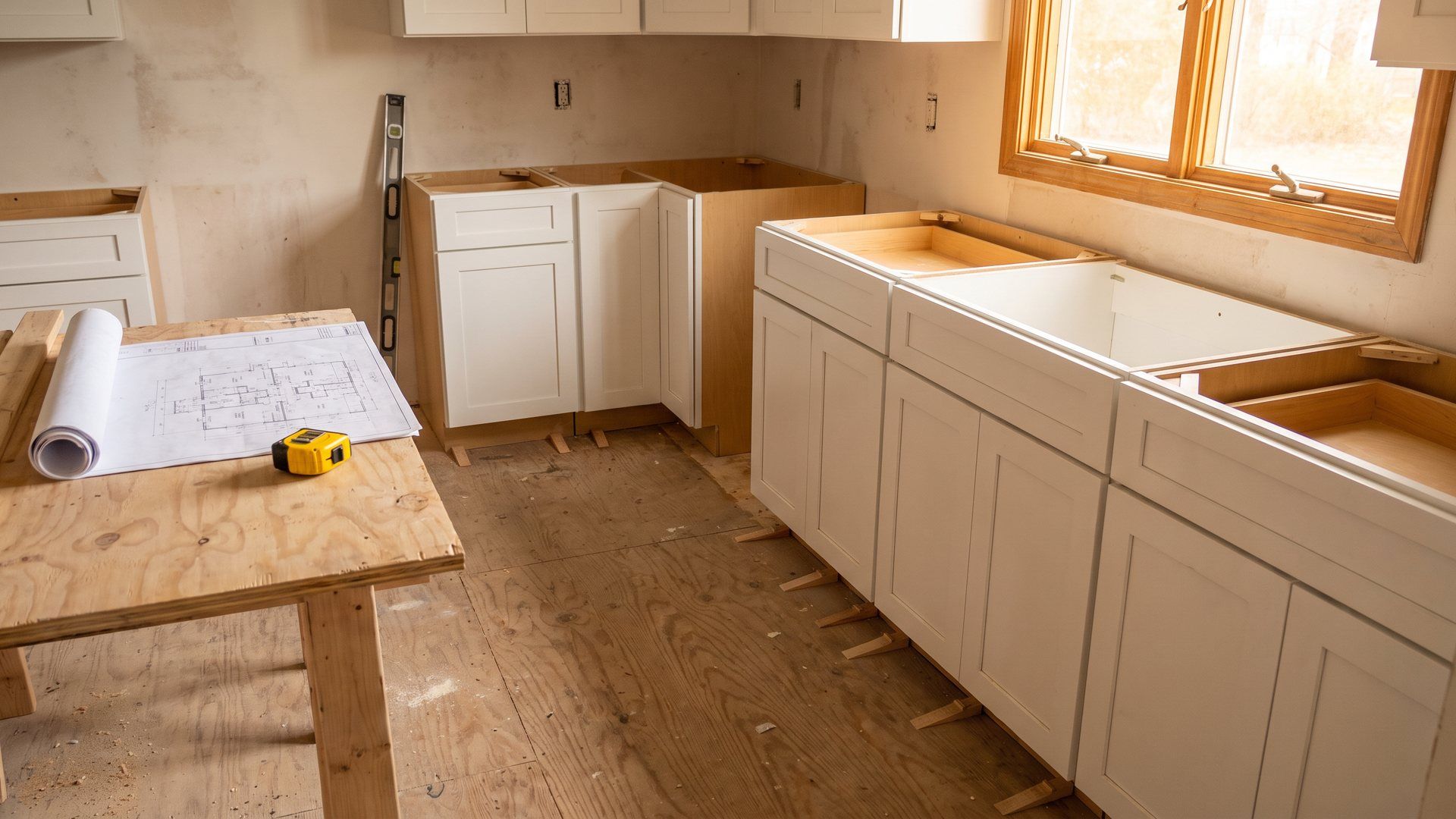
Painting kitchen cabinets is excellent value when the bones of your kitchen are good, and it is genuinely transformative. But it is a preparation job with a painting step at the end, not a painting job, and the price reflects that.
If you are getting quotes, the questions that separate a lasting finish from a disappointing one are: how are you degreasing, what primer, what coating, and are the doors sprayed or brushed. Anybody who answers those clearly knows what they are doing.
And if your cabinets are thermofoil, or the boxes are sagging, let somebody tell you honestly that paint is not the answer. That advice is worth more than the job.
Jeff's Home Improvement does kitchen remodeling and interior painting across Basking Ridge, Bedminster, Bernardsville, Far Hills, Gladstone, Hillsborough and Warren, and we are perfectly happy to tell you when painting is the smart move and when it is not.
Get in touch and we will take a look at what you have.
Jeff's Home Improvement. NJHIC LIC #13VH06643500.