

Drywall Repair Cost: What Actually Drives the Price in a New Jersey Home
Somebody put a doorknob through a wall.
Or the dog did something ambitious. Or you took down a mounted television and discovered the anchors had taken a fair amount of wall with them. Or there is a crack above a doorframe that has been slowly getting longer for two years and you have finally stopped pretending it is not there.
Whatever brought you here, you are looking at a damaged wall and trying to work out whether this is a fifty dollar afternoon or a phone call.
I get asked about drywall pricing more than almost anything else, and it is the question I find hardest to answer over the phone, because two holes that look identical can be genuinely different jobs. A fist-sized hole in a flat painted wall in a hallway is a very different proposition to a fist-sized hole in a textured ceiling above a staircase.
So rather than throw a number at you that will probably be wrong, let me explain what a contractor is actually pricing when they look at your wall. Once you understand that, you can look at your own damage and know roughly where you sit, and you will be able to tell whether a quote you have been given is reasonable.
If you want the step-by-step on patching small holes yourself, we covered that separately. This one is about scope, cost and knowing when the job has outgrown you.
The Five Things That Determine the Price
Almost every drywall quote comes down to the same handful of variables. In rough order of how much they move the number:
1. How Big the Damage Is, and What Kind
Size matters, but not the way most people assume. The relationship is not linear, and there are thresholds where the job changes character entirely.
Nail holes and small dings are filler and sanding. Genuinely trivial. If a contractor is already in your house doing something else, these often get absorbed into the job.
Holes up to roughly the size of your fist get a patch. There are several methods, and a competent person does this quickly.
Anything bigger than about six inches usually means cutting the damaged area back to a neat rectangle, screwing in backing, fitting a new piece of board, then taping the joints. Now you have four seams to hide instead of one small patch, and hiding seams is the skilled part.
Damage that crosses a stud, or runs across more than one sheet, is a different job again. At some point it stops being a repair and becomes a partial replacement, and replacing a whole sheet is often cheaper and better than patching a badly damaged one.
The counterintuitive part: a lot of small holes scattered across a room can cost more than one big hole, because it is the setup, the multiple visits for drying time, and the finishing that eat the hours, not the amount of board.
2. The Finish You Have to Match
This is the one homeowners never see coming, and it is frequently the difference between a cheap job and an expensive one.
If your walls are flat and smooth, matching is straightforward. Tape, coat, sand, prime, paint.
If your walls or ceilings are textured, everything changes. Knockdown, orange peel, skip trowel, and the various swirl patterns all have to be reproduced by hand, and matching an existing texture so the eye cannot find the repair is a genuine skill. It usually takes practice on a scrap board before anyone touches your wall.
And popcorn ceilings deserve their own warning. Matching popcorn is difficult, the results are often visible anyway, and if the house is old enough there is a real chance the material contains asbestos. Nobody should be sanding or scraping a popcorn ceiling in a home of a certain age without testing first. That is not caution for its own sake, it is a legal and health matter, and it changes the cost of the job substantially because it becomes an abatement question rather than a drywall question.
3. How Hard the Spot Is to Reach
A hole at chest height in the middle of a hallway wall is the cheapest possible location.
A ceiling costs more, because working overhead is slower and harder and the finishing has to be better, since ceilings catch raking light that shows every imperfection.
A stairwell wall is worse again, because now somebody is building staging to stand on, and setup time is real time.
Tight spaces behind fixtures, inside closets, or above kitchen cabinets slow everything down for obvious reasons.
4. Whether Anything Else Has to Be Fixed First
This is the big one, and it is why I never quote drywall over the phone if the words "water" or "crack" come up.
Drywall is almost always a symptom. If there is a stain, something leaked, and patching over it without finding the leak means doing the whole job again in eight months. If there is a crack that keeps coming back after being filled, the wall is moving, and filling it again will not stop it moving.
Repeat cracks in the same spot generally mean one of three things: normal seasonal movement, a framing issue, or settlement. The first is cosmetic and can be managed. The other two need looking at properly before anybody skims filler over the evidence.
Mold behind the board changes the job entirely. So does rotted framing.
Any of these can turn a modest repair into a much larger piece of work, and a contractor who cannot see behind your wall cannot price for them honestly. This is precisely why good quotes for water-related damage are given after somebody has opened up a small area to look.
5. Painting, and How Far It Has To Go
Here is the thing almost nobody accounts for.
You cannot paint just the patch. A freshly primed repair will read as a different sheen and often a slightly different color, even with paint from the original can, because the surrounding paint has aged and faded.
So the real question is how far the paint has to go. Sometimes you can stop at a natural break, a corner or a trim line. Sometimes the only way to make it invisible is to paint the whole wall. Occasionally, in a room with an open layout and no natural break, it is the whole room.
When you compare quotes, check carefully whether painting is included and how much of it. This is the most common reason two quotes for "the same job" are far apart. One of them is planning to paint a wall and the other is planning to paint a patch.
When It Is Worth Doing Yourself
I am not going to pretend every drywall job needs a contractor. Plenty do not.
Reasonable to take on yourself: nail holes, small dings, anchor holes, and hairline cracks in flat paint. Patch kits work fine for holes up to a few inches. The materials cost very little.
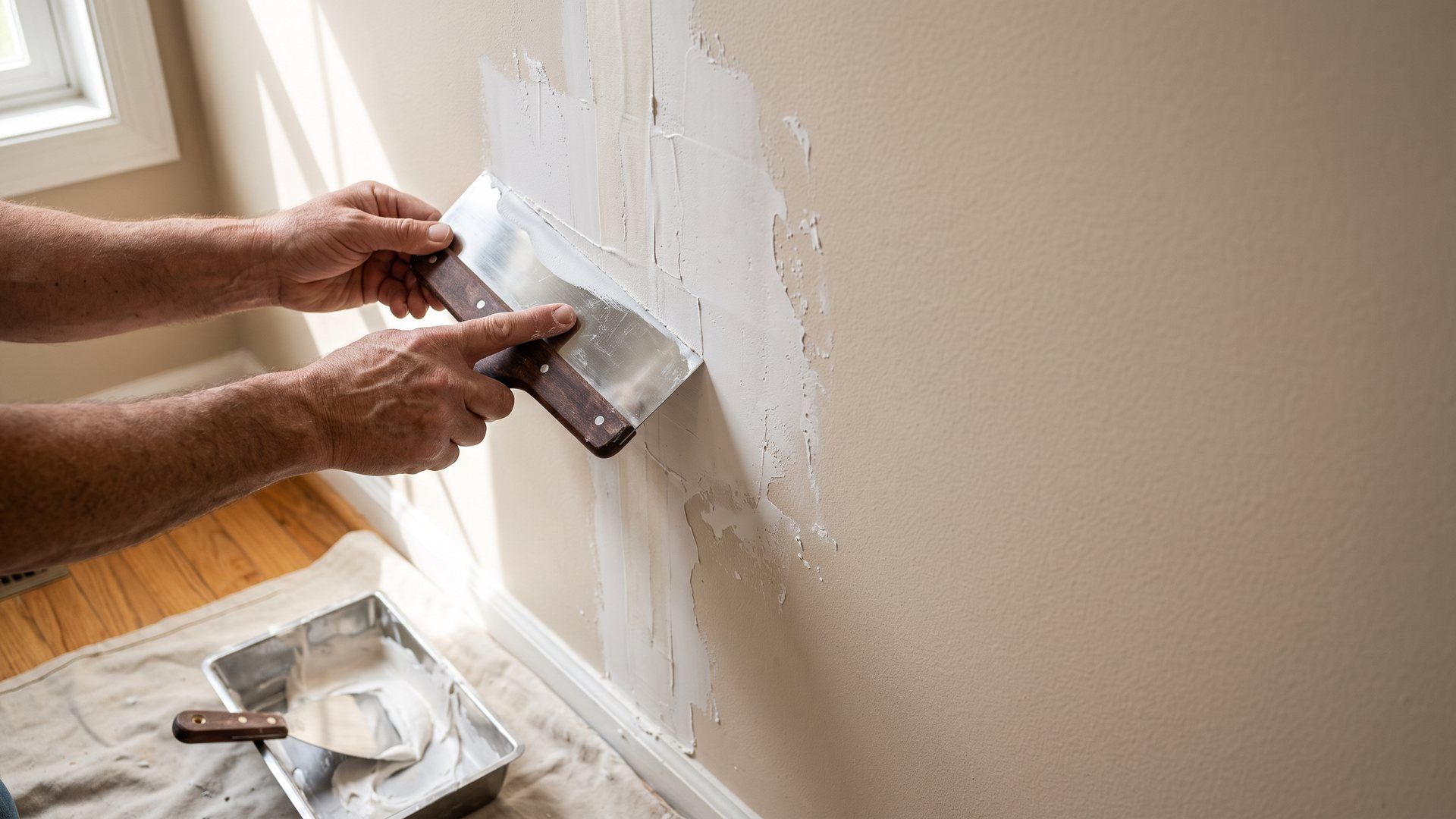
Where most DIY attempts go wrong: the finishing, almost every time. People apply compound too thick, do not feather it out far enough, and sand it back until they have created a visible depression. The trick is thin coats, each one wider than the last, and patience between them. Rushing this is what produces the halo you can see from across the room in afternoon light.
Worth calling somebody for: ceilings, textured surfaces, anything larger than roughly a foot, anything involving water, anything that has cracked more than once, and anything in a room where the light is unforgiving. Also, honestly, anything you have already tried to fix twice.
There is no shame in the last one. Repairing a bad repair is a normal part of my week.
What a Fair Quote Should Look Like
A quote that just says "drywall repair" and a number is not enough information to accept or compare.
You want it to tell you:
The size and location of each area being repaired
Whether it is a patch or a board replacement
What texture matching is involved, if any
How many coats of compound, and the drying time between them
Exactly how much painting is included, and whether primer is separate
Who is doing the cleanup, because drywall sanding makes a remarkable amount of very fine dust that gets everywhere
What happens to the price if something is found behind the wall
That last point is the mark of an honest contractor. Anybody who guarantees a fixed price on water-damaged drywall before opening it up is either padding heavily or setting up a difficult conversation later.
The Dust Nobody Warns You About
A quick practical note, because this catches people out more than the cost does.
Sanding joint compound produces an extremely fine dust that behaves more like smoke than like sawdust. It travels through the house, settles on everything, and gets into electronics and HVAC returns. A weekend patch job in a bedroom can leave a film across a whole floor of the house.
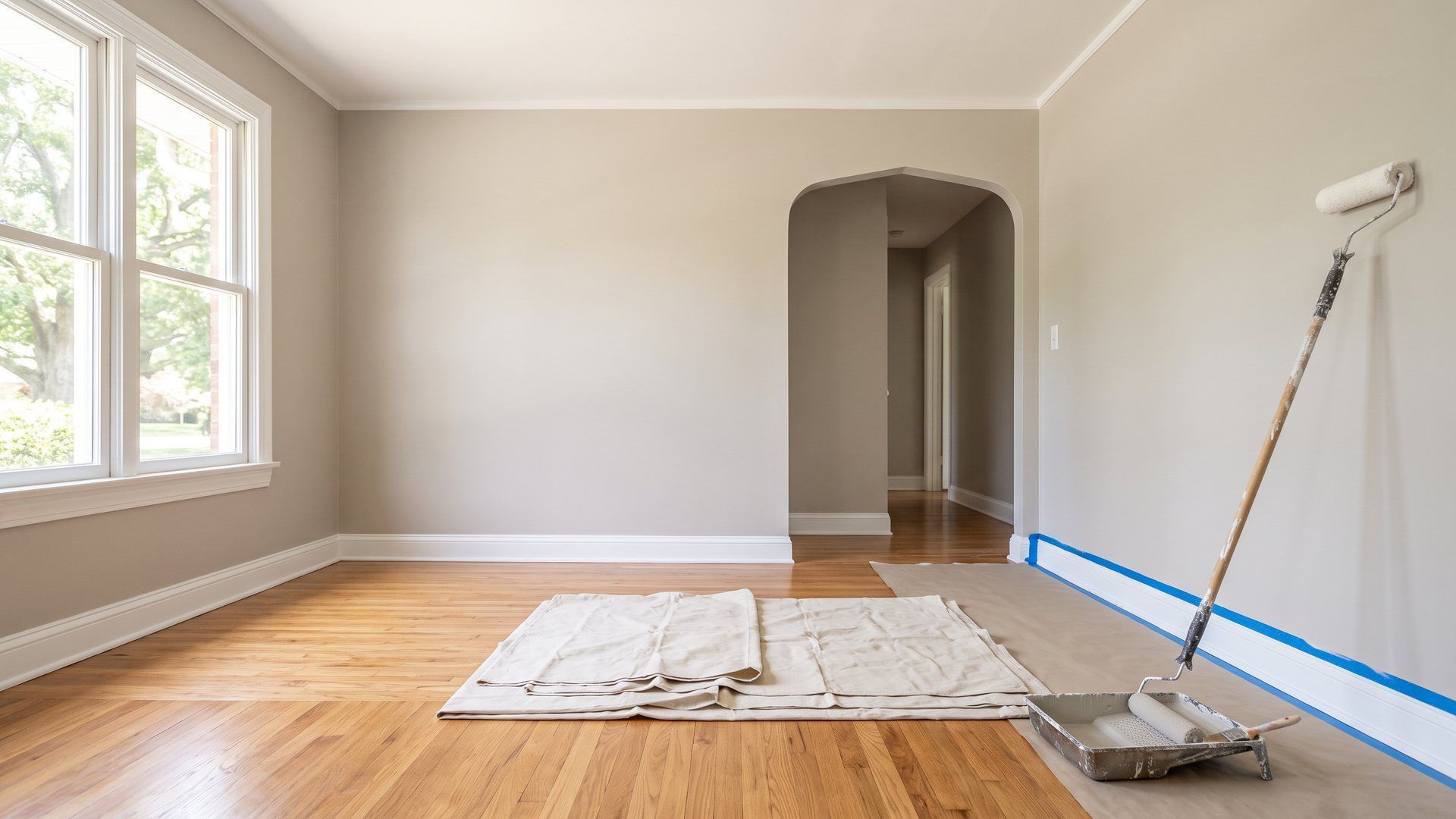
Anybody doing this properly will seal the room with plastic, cover the HVAC return, and either use a vacuum sander or wet-sand the final coat. If you are doing it yourself, at minimum tape plastic over the doorway and turn the system off. It takes ten minutes and it saves a day of cleaning.
What Different Kinds of Damage Are Telling You
Not all drywall damage means the same thing, and reading it correctly is what stops you paying for the same repair twice.
Impact damage is the simplest. A doorknob, a piece of furniture, a chair back. There is nothing behind it and nothing to investigate. Patch it, and if it is a doorknob hole, fit a door stop while you are at it, because that hole will come back otherwise.
Popped nails and screws show up as small round bumps or cracks in a line. This is the fastener backing out as framing dries and shrinks, and it is extremely common in homes during their first few years and again after a very dry winter. The fix is to drive a new screw an inch or two away, set the popped fastener properly, and patch both. Filling the bump alone achieves nothing.
Corner bead damage happens on outside corners, usually from furniture or vacuum cleaners. The metal or plastic bead under the compound gets dented, and once it is bent it has to be cut out and replaced rather than filled over. This is more work than the size of the damage suggests.
Hairline cracks at door and window corners are the classic seasonal movement crack. Openings are weak points in framing, and the corner is where stress concentrates. Usually cosmetic.
Long horizontal cracks, particularly along a ceiling line or partway up a wall, deserve more attention. These can indicate a taped joint failing, but they can also indicate framing movement.
Stair-step cracking, doors that have started sticking, or cracks that keep widening are the ones I would want to look at properly. That combination can point to settlement, and no amount of drywall work addresses it.
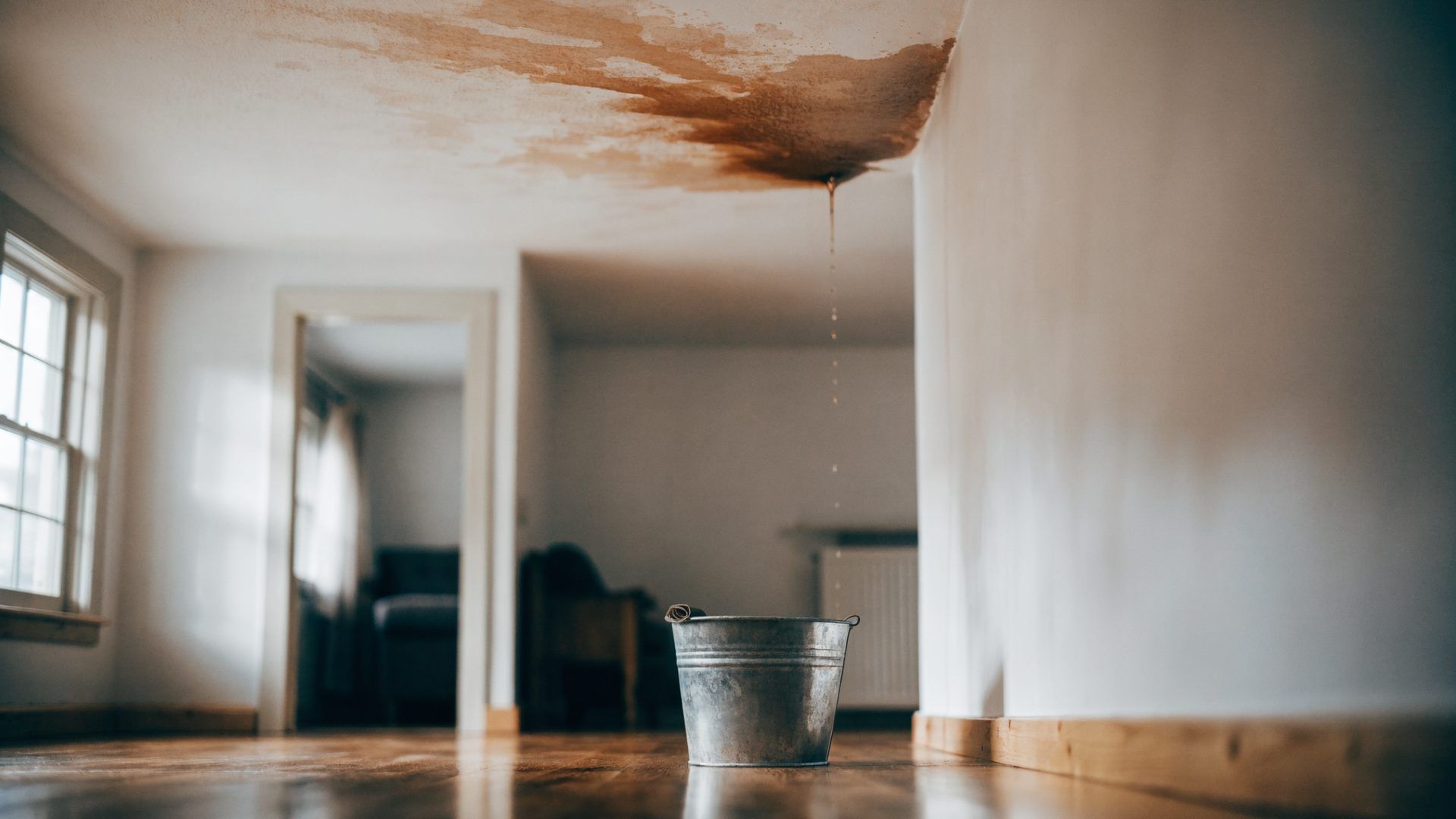
Water staining is never just drywall. Something above or behind it is wet, or was. Find the source first. Brown or yellow staining also bleeds straight through ordinary paint, so it needs a stain-blocking primer even after the cause is fixed.
The rule of thumb: if it happened once and you know what caused it, it is a repair. If it keeps happening, or you do not know what caused it, it is a symptom.
Common Questions About Drywall Repair
Why does the same crack keep coming back after I fill it?
Because filler is not structure. If a crack reopens in the same place, something is moving, and compound has no ability to stop it.
The most common cause is seasonal movement. Wood framing expands and contracts as humidity swings, which around here it does considerably between a humid July and a dry January. Cracks above doors and windows are classic examples, because those openings are weak points in the framing.
The fix for a movement crack is not more filler, it is to reinforce the joint properly with tape rather than just skimming over it, and in some cases to open it up and address the framing behind it. If a crack is widening over time, is wider than a hairline, or is accompanied by doors that have started sticking, that is worth having somebody look at properly, because now you are potentially talking about settlement rather than cosmetics.
Can new drywall be matched to old so the repair does not show?
On a flat painted wall, yes, almost always, and a good finisher will leave you unable to find it.
On texture, mostly, and it depends heavily on the texture and on the person doing it. Knockdown and orange peel can be matched very closely. Hand-applied patterns are harder because they carry the signature of whoever originally applied them.
The two things that make a repair visible are usually not the patch itself. They are the sheen difference where new paint meets old, and light. A repair that is invisible under a lamp can announce itself in raking morning sun across a wall. That is why painting to a natural break matters so much, and why the wall you thought was one color often turns out not to be.
Is it cheaper to replace a whole sheet than patch several holes in it?
Often, yes, and homeowners are usually surprised by that.
Each individual patch carries its own setup, its own multiple coats with drying time between them, and its own feathering and sanding. Do that five times in one wall and you have spent more hours than cutting out the sheet and hanging a new one.
The crossover point is roughly three or four significant holes in the same sheet, though it shifts depending on where they sit. It is worth asking your contractor to price both ways if you have a wall that has taken repeated damage. A wall that has been patched many times over the years also tends to look uneven under good light, and replacement resets it.
Should I fix drywall damage before selling my house?
Generally yes, and it is one of the better returns available on pre-sale work, because the cost is modest and the perception effect is large.
Visible wall damage does something disproportionate to buyers. It reads as deferred maintenance, and it makes people wonder what else has not been looked after. A hole in a wall costs very little to fix relative to what it does to a buyer's impression of a house.
The exception is water staining. Do not paint over a water stain to sell a house. Beyond the fact that stains bleed back through ordinary paint and reappear, you are legally required to disclose known water damage in New Jersey, and covering evidence of a problem you know about is a genuinely bad idea. Fix the cause, repair it properly, and disclose it. That is a much better position than the alternative.
The Bottom Line
Drywall repair is one of the few jobs where the material is nearly free and you are paying almost entirely for skill and patience. The board costs very little. What you are buying is somebody who knows how to feather a joint so that light does not find it, and who knows enough to stop and ask why there is a stain before covering it up.
So when you are pricing a repair, the questions that matter are: how much painting is included, is there texture to match, and is anybody going to check what caused the damage in the first place.
If it is a small hole in a flat wall, buy a patch kit and take your time with the sanding. You will do fine.
If it is a ceiling, a texture, a stairwell, or anything with a water stain near it, that is worth a professional set of eyes.
At Jeff's Home Improvement we handle drywall and damage repair across Basking Ridge, Bedminster, Bernardsville, Far Hills, Gladstone, Hillsborough and Warren, and it is very often part of a larger handyman visit rather than a job on its own, which is usually the most economical way to get it done. If you have a list of small things around the house, get them looked at together rather than one at a time.
Get in touch and we will tell you honestly whether it is something you should just do yourself.
Jeff's Home Improvement. NJHIC LIC #13VH06643500.